Commercial Ice Machine Harvest Problems: Diagnosing Freeze-Ups and Harvest-Timeout Errors
Aug 20th 2026
Reading Time: 4 Minutes

Summary
A commercial cube ice machine may experience a long harvest or freeze-up when the evaporator does not receive enough heat, the ice cannot release cleanly, or the control system receives an incorrect signal. Common causes include restricted hot-gas flow, scale or evaporator damage, failed harvest-assist components, and faulty thickness, float, curtain, or temperature controls.
Because harvest sequences, sensors, time limits, and assist mechanisms vary considerably by manufacturer and model, technicians should always confirm the sequence of operation and test specifications in the equipment service manual. A structured inspection helps separate water-system, control, mechanical, and sealed-system faults before parts are replaced.
How the Harvest Cycle Works
The harvest cycle in a commercial ice maker is a time-sensitive thermodynamic balance. During freeze mode, the refrigeration system lowers the evaporator temperature until the control system determines that proper ice formation has occurred.
When harvest control criteria are met, the control board energizes the hot-gas solenoid valve (and, where equipped, harvest-assist or water-system components). The hot-gas valve routes high-pressure discharge gas from the compressor’s discharge line through the evaporator circuit. This warms the evaporator surface, weakening the bond between the grid and the ice so the slab can release into the storage bin.
If the ice does not release within the programmed safety window, the control system may stop the cycle, record a long-harvest fault, retry the sequence, or shut down the machine, depending on the manufacturer and model.
Why the Manufacturer’s Sequence Matters
Technicians must recognize that commercial ice machine manufacturers use different control strategies to initiate and terminate the harvest cycle:
- Manitowoc-Style Systems:
- Commonly use an adjustable ice-thickness probe to detect when the ice bridge has reached the harvest point.
- A water curtain or damper switch then helps the control board confirm that the slab has released so the machine can terminate the harvest phase.
- Hoshizaki-Style Systems:
- Commonly use a combination of float-switch, thermistor, and timed control inputs to manage freeze and harvest cycles.
- The exact role of each input varies by control board and specific machine model.
- Scotsman & Other Systems:
- May utilize mechanical harvest-assist drive motors or solenoids equipped with pushrod pins that physically push against the slab to assist release once the evaporator surface warms.

Always consult the wiring diagram and service manual for the exact model and serial number to verify how harvest is initiated, timed, and terminated.
Primary Fault Categories
Harvest failures generally stem from four primary fault categories:
1. Hot-Gas Bypass Solenoid & Sealed-System Faults
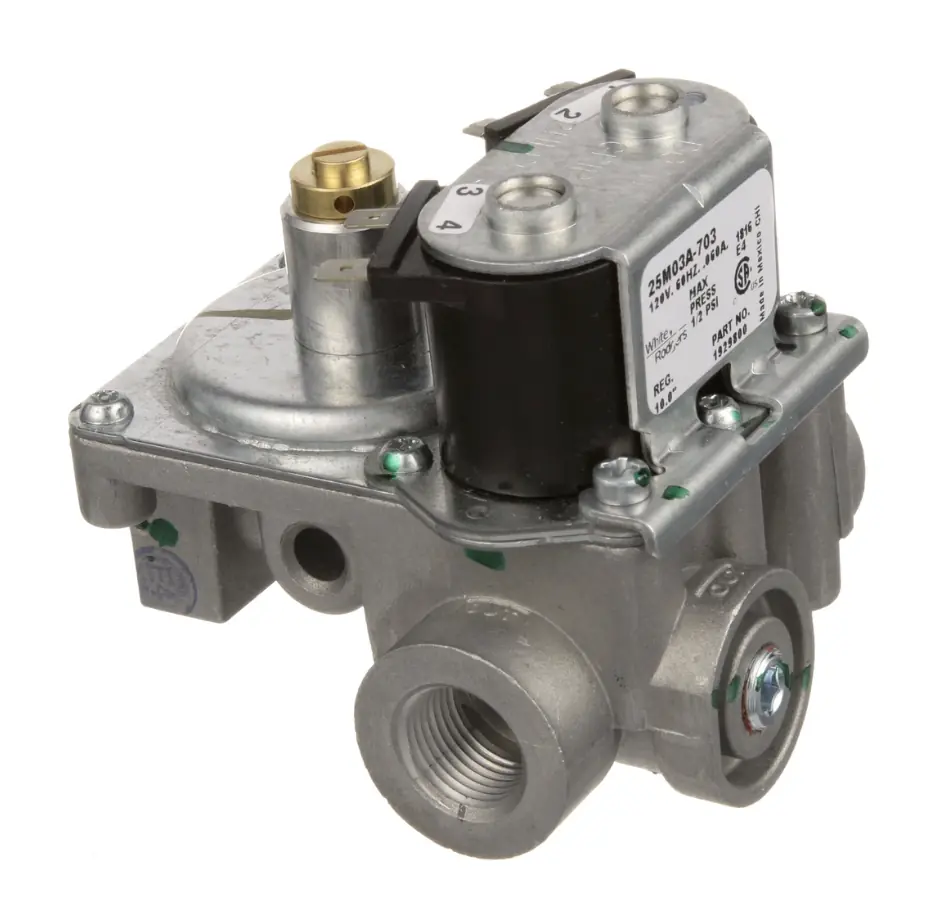
A hot-gas valve with a pitted or contaminated internal plunger may leak hot gas into the evaporator during freeze, lengthening freeze times and contributing to uneven ice formation. During harvest, a valve that does not open fully can restrict heat delivery to the evaporator.
Open or shorted solenoid coils prevent actuation entirely. Additionally, low refrigerant charge, inefficient compressor valves, or liquid-line restrictions can prevent sufficient heat from reaching the evaporator during harvest, even if the hot-gas valve opens fully.
2. Mechanical Assist Failures
Solenoid or motor-driven mechanical pushrods can bind, strip drive gears, or fail electronically, preventing the assist mechanism from exerting pressure against the ice slab.
3. Sensing & Control Loop Faults
Misadjusted or mineral-fouled ice-thickness probes, failing thermistors, or out-of-spec float switches can delay harvest initiation, leading to a heavy slab freeze-up, or trigger premature harvest before a complete ice slab has formed, resulting in thin, incomplete, or inconsistent ice release.
Magnetic reed switches or mechanical curtain switches that stick can prevent the control board from recognizing that ice has released or otherwise disrupt the machine’s harvest and bin-control sequence.
4. Evaporator Condition & Water Quality
Hard water scale acts as a thermal insulator and creates a rough, physical anchor that mechanically binds ice to the grid.
On nickel-plated copper evaporators, harsh acid cleanings or age can cause the nickel plating to peel. Once the plating begins to peel, the damaged and increasingly rough evaporator surface can hold the ice in place and interfere with consistent harvest. Follow the manufacturer's inspection criteria to determine whether evaporator replacement is required.
Diagnostic Sequence
When responding to a long-harvest fault or a frozen-over evaporator, follow this diagnostic sequence. Compare all electrical, dimensional, and temperature readings against the manufacturer's published service literature.
| Step | Component / Area | Test Procedure | Expected Condition | Potential Corrective Action |
|---|---|---|---|---|
| 1 | Visual & Evaporator Inspection | Inspect evaporator grid for scaling, physical warping, or peeling nickel plating. | Smooth, clean grid surface with no exposed copper or heavy scale. | Delime unit with approved nickel-safe cleaner. If plating is flaking or peeling, evaluate the evaporator against manufacturer inspection criteria. |
| 2 | Harvest Switch & Sensor Check | Inspect thickness probes, float switches, and temperature sensors for scale or damage. Check curtain magnetic reed switch operation. | Components clean and free of scale; switches open and close cleanly per manufacturer specifications. | Clean sensors using manufacturer-approved cleaner, material, and procedure. Adjust probe gap only when service literature identifies an approved adjustment. Replace switches or thermistors that fail the manufacturer’s prescribed electrical or operational test. |
| 3 | Hot-Gas Valve Coil | Measure AC voltage across the coil terminals during harvest mode. De-energize unit to measure coil resistance. | Rated voltage present at coil during harvest. Coil resistance within manufacturer specifications when de-energized. | If the coil receives rated voltage but does not operate, de-energize the machine and test resistance. Replace coil if readings confirm an open or shorted winding. If rated voltage is absent, inspect wiring, connectors, control inputs, relays, and board outputs. |
| 4 | Refrigerant Temperature Differential | Place a clamp-style temperature sensor on the suction line leaving the evaporator during harvest. | Temperature rise on the suction line following valve actuation, as defined by model manual. | If the valve is energized but the expected temperature change does not occur, verify refrigerant charge, compressor performance, valve operation, and other model-specific circuit conditions before replacing parts. |
| 5 | Harvest-Assist Mechanism | Observe mechanical pushrod or assist mechanism during the designated harvest window. | Harvest-assist mechanism energizes and moves at the point specified in the manufacturer's sequence. | Inspect the coil or motor, linkage, pushrod, mounting, and control signal before replacing the assembly. |
⚠️ Safety & Compliance Boundary
De-energize and lock out the machine following OSHA Lockout/Tagout (LOTO) procedures before performing resistance tests, inspecting wiring, or handling internal mechanical components. Energized voltage and sequence-of-operation testing should be performed only by qualified technicians using appropriate PPE, properly rated instruments, and the manufacturer’s prescribed live-testing procedures.
Service that requires opening, evacuating, or brazing on the sealed refrigeration circuit requires appropriate EPA Section 608 Certification. When servicing equipment containing an A3 flammable refrigerant such as R-290, follow the manufacturer’s approved service procedure, use tools rated for the refrigerant, control ignition sources, provide appropriate ventilation, and verify that the circuit and work area are safe before performing sealed-system work.
Parts Sourcing & Planned Maintenance Strategy
Preventing harvest cycle callbacks requires proactive parts planning and accurate component matching.
- Prioritize Commonly Serviced Components: Components subject to electrical or mechanical fatigue, such as magnetic curtain switches, hot-gas valve coils, relays, and temperature sensors, should be evaluated for service truck inventory based on fleet density.
- Verifying Replacement Specifications: When replacing hot-gas valves, coils, or control components, verify voltage, pipe dimensions, orifice sizing, maximum operating pressure differential (MOPD), and mounting footprint.
- Utilizing OCM Components: AllPoints OCM parts can provide a cost-effective alternative for eligible applications. Always cross-reference the replacement against the machine model, serial number, voltage, connection type, operating specifications, and required certifications.
Frequently Asked Questions
What causes a commercial ice machine to freeze into a solid block of ice?
A solid-block freeze-up can occur when the machine remains in freeze too long, does not release ice correctly during harvest, or continues adding or circulating water after a failed release. Possible causes include incorrect thickness, float, thermistor, or curtain-switch inputs; a leaking water valve; a failed hot-gas valve; low refrigerant charge; improper water distribution; control or timing faults; and severe evaporator scaling. The exact causes depend on the machine’s operating sequence.
Why does the hot-gas valve coil feel warm if the ice won't drop?
A warm hot-gas valve coil does not confirm that the coil is receiving the correct voltage or that the valve is allowing refrigerant flow. Verify coil voltage during harvest and compare the result with the wiring diagram. If the electrical input is correct, evaluate coil condition, valve operation, refrigerant charge, compressor performance, and other model-specific circuit conditions.
Can hard water scale cause a harvest timeout error?
Yes. Mineral scale forms a physical barrier that acts as a thermal insulator, preventing hot-gas heat from reaching the ice sheet efficiently. It also creates a rough texture that binds the ice to the grid. Regular cleaning using manufacturer-approved, nickel-safe ice machine cleaner is essential for maintaining proper harvest release.
Keep Field Support Moving Efficiently
Solving harvest cycle failures requires balancing systematic diagnostics with the right replacement parts. Use the AllPoints Parts Catalog and Technical Resources to verify model-specific compatibility for hot-gas valves and coils, harvest-assist assemblies, sensors, switches, and control components to keep commercial ice machines operating reliably.