When OEM Parts Are Backordered: Evaluating Compatible OCM Alternatives
Oct 2nd 2026
Reading Time: 4 Minutes
Summary
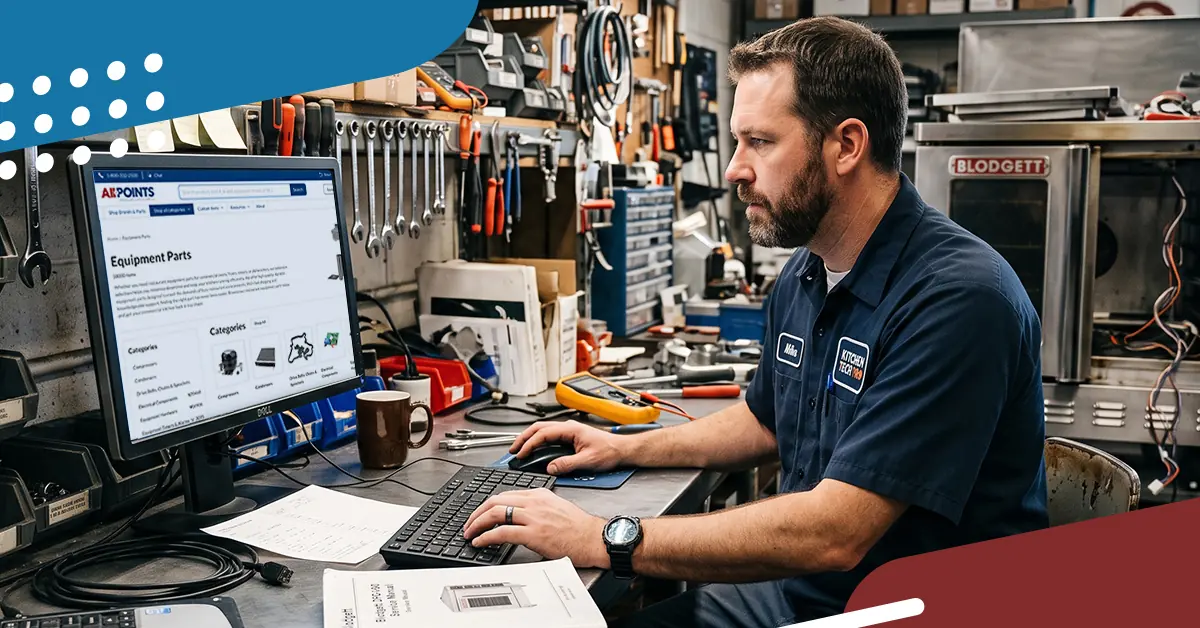
When critical commercial kitchen equipment goes down, an extended OEM parts backorder can prolong downtime and disrupt service. In some applications, a properly verified Original Component Manufacturer (OCM) alternative can provide another sourcing path without waiting for the OEM-packaged component to become available.
Parts buyers and service managers can navigate supply constraints by:
- Distinguishing between specialized proprietary assemblies and standard industrial components.
- Verifying the critical electrical, hydraulic, thermal, and regulatory parameters of potential alternatives.
- Evaluating verified OCM alternatives when compatible options are available, helping reduce downtime and control repair costs.
The Operational Cost of Equipment Backorders
Supply chain disruptions and extended factory backorders continue to challenge commercial foodservice operations. For high-volume kitchens, a primary cooking or refrigeration asset sitting idle while waiting for an OEM component is rarely an acceptable option.
When critical assets like a primary conveyor oven, pass-through dishmachine, or multi-vat fryer are down, the financial impact extends far beyond the price of the part:
Direct Revenue Loss: Menu limitations or reduced throughput directly impact ticket volumes during peak service windows.
Labor Inefficiencies: Kitchen staff are forced into slower, manual workarounds that increase ticket times and drive up labor costs.
Customer Dissatisfaction: Inconsistent cook quality or menu unavailability damages customer retention and brand reputation.
To keep lines operating, service managers and parts buyers need a dependable, compliant strategy to evaluate alternative components when primary distribution channels stall.
Understanding Component Sourcing Paths
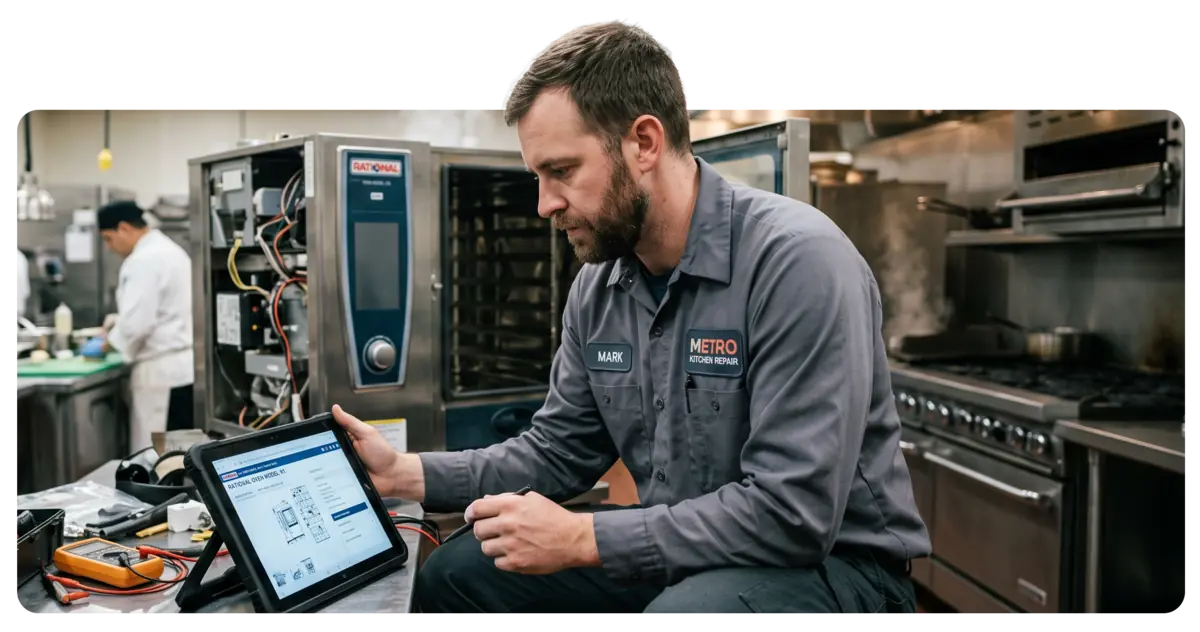
Much of the friction surrounding equipment backorders stems from a misunderstanding of how commercial kitchen appliances are built. Commercial equipment manufacturers (OEMs) rarely manufacture every switch, valve, motor, and heating element in-house. Instead, they engineer equipment around specialized components produced by industrial electrical, fluid-control, and mechanical manufacturers.
In many cases, equipment manufacturers source these components from established component specialists. In some applications, a properly cross-referenced OCM version of that component may also be available through an independent distribution channel. That gives service professionals another sourcing option when the OEM-packaged part is unavailable:
- OEM Parts: Components packaged and distributed under the brand name of the equipment manufacturer. These are typically the recommended starting point for equipment operating under active factory warranty terms.
- OCM Parts: Components produced by original component manufacturers and available as alternatives to OEM-packaged parts in compatible applications. OCM parts are made with the exact same specifications and materials as OEM parts, but they are brought to market directly rather than through the original equipment manufacturer's branding process.
Four-Point Verification Protocol for Sourcing Alternatives
Substituting an alternative component under tight turnaround windows requires disciplined verification. Never replace an unavailable part based on visual similarity alone.
When evaluating a potential alternative, use the equipment documentation, original component specifications, and verified cross-reference information to confirm the critical requirements below:
1. Electrical Ratings & Input Compatibility
- Coil & Operating Voltage: Match line voltage and control circuit requirements exactly (e.g., 24VAC, 120VAC, 208/240VAC; 50/60 Hz).
- Load Capacities: Confirm that resistive (heating) or inductive (motor/compressor) amperage ratings meet or exceed the circuit's calculated demand.
- Switching Logic: Verify contact arrangement (e.g., SPST, DPDT, 3-pole) and any auxiliary contact interlocks required by the control board.
2. Water-Flow & Pressure Requirements
- Port Sizing & Thread Standards: Verify physical port dimensions and thread types (e.g., NPT, BSPP, compression, or flare fittings).
- Flow Rates & Orifice Sizing: Ensure flow coefficients (Cv) and internal orifice sizes match to prevent pressure drops or improper delivery rates in water valves and gas regulators.
- Pressure Ratings: Check maximum operating pressure differential (MOPD) on solenoid valves to ensure reliable opening and closing under line pressure.
3. Thermal & Environmental Tolerances
- Temperature Limits: Ensure terminal blocks, coil insulation, and body materials are rated for the high ambient temperatures common in back-of-house equipment.
- Enclosure & Ingress Ratings: Where equipment is exposed to grease vapor, heat, or moisture, verify that replacement switches, relays, and enclosures carry the appropriate environmental protection for the application.
4. Regulatory & Sanitation Compliance
- Safety Certifications: Verify any applicable third-party certifications or component recognition (such as UL, CSA, or ETL), along with the conditions under which the component is approved for use.
- Sanitation Standards: For components installed in food or potable water paths, confirm documented compliance with applicable sanitation standards (such as NSF/ANSI 51 for materials or NSF/ANSI 61 for drinking water system components).
Balancing Warranty, Availability, and Repair Scenarios
Managing component sourcing requires balancing equipment age, warranty terms, and operational urgency:
| Repair Scenario | Sourcing Approach | Key Considerations |
|---|---|---|
| Active Factory Warranty | Start with OEM | Review manufacturer warranty requirements and obtain authorization before making a substitution where required. |
| Out-of-Warranty Repair | Compare OEM & OCM Options | Evaluate compatibility, availability, cost, certifications, and application requirements to choose the best path. |
| Planned Fleet Maintenance | Build Approved Cross-References | Identify frequently used OEM and OCM options in advance so technicians aren't making sourcing decisions for the first time during an emergency outage. |
Frequently Asked Questions
How should safety certifications be considered when selecting an OCM replacement?
Verify that the replacement component carries the appropriate certifications or component recognition for the application and that its ratings, installation requirements, and conditions of use align with the equipment and original component. For safety-critical applications or where equipment certification is a concern, consult the equipment manufacturer, component documentation, or the applicable authority having jurisdiction (AHJ) before making a substitution.
How can a service manager verify that an OCM part is a true match?
Cross-referencing should be handled through verified parts catalogs and technical support teams. Use the equipment model number, serial number, and original part number to confirm voltage, physical mounting footprint, port size, and load ratings against the component manufacturer's published specifications.
Can OCM parts provide cost savings in addition to solving availability issues?
Yes. Across AllPoints' OCM offering, verified OCM parts average approximately 15% less than comparable OEM options. This allows service organizations to maintain broad parts coverage and manage repair costs without compromising on component quality.
Keep Kitchen Lines Operating Without Delay
Extended OEM backorders do not have to halt your service operations. Use the AllPoints Parts Catalog and Technical Resources to identify compatible, in-stock OCM replacement components, cross-reference part numbers by model and serial data, and keep your customers' commercial kitchens operating reliably.