What is a Thermocouple? The Unsung Hero of Gas Equipment
Dec 19th 2025
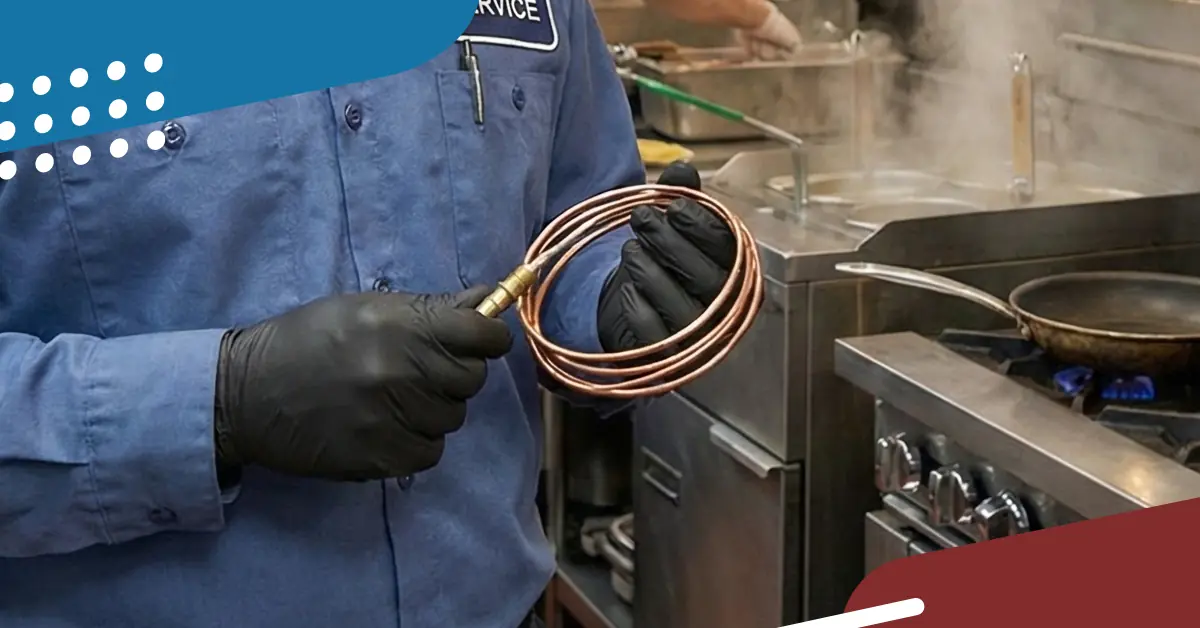
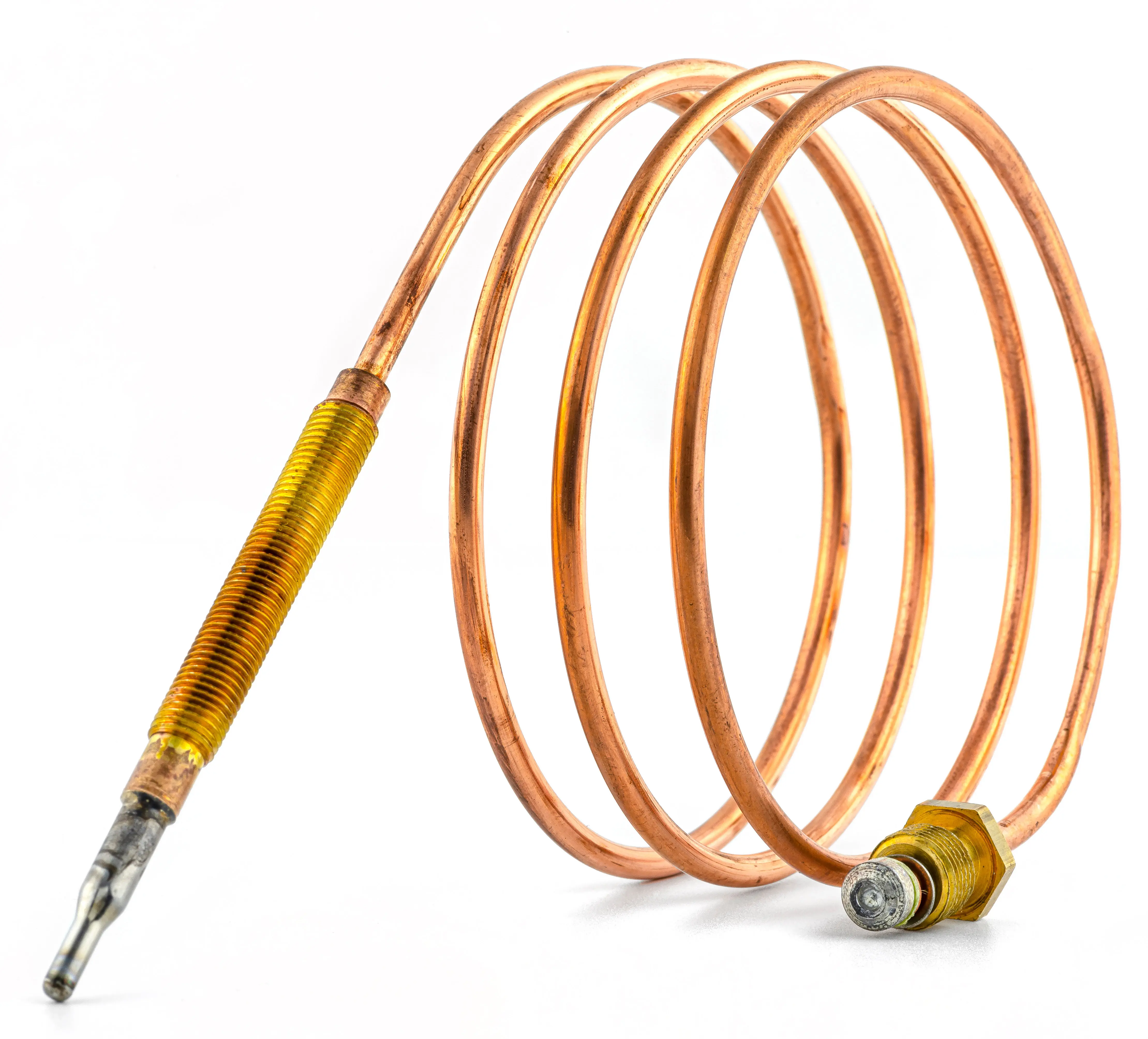
The most common reason a pilot light won't stay lit costs very little and looks like a simple piece of copper wire. But without it, your entire gas range, fryer, or oven becomes a useless metal box.
We are talking about the thermocouple.
While experienced technicians change these out in their sleep, understanding exactly how they work is critical for faster troubleshooting. Here is the breakdown of this vital safety component.
How It Works: The Power of Millivolts
A thermocouple is essentially a thermal generator. It consists of two metals joined together at one end (the "hot junction").
When the pilot flame heats this tip, a chemical reaction occurs that generates a tiny amount of electricity, typically 30 millivolts.
This electricity travels down the copper tube to the gas valve. Inside the valve, there is a small electromagnet. As long as that 30mV charge is present, the magnet stays energized and holds the safety valve open, allowing gas to flow to the pilot and main burners.
Why It Is Vital
The thermocouple is the gatekeeper. Its job is to answer one question: "Is there a flame?"
If the pilot light blows out, the thermocouple tip cools down, and the electrical charge drops to zero. Then the electromagnet loses power, and the spring-loaded safety valve snaps shut, cutting off the gas supply.
Without this automatic shutoff, unlit gas would continue to fill the kitchen, creating a massive explosion hazard.
Pro-Tip: Troubleshooting a "Bad" Thermocouple
If a pilot won't stay lit, don't just blindly swap the part. Check these three things first:
- Flame Contact: The flame must envelop the top 3/8 to 1/2 inch of the thermocouple tip. If the pilot is weak or dirty, it won't generate enough heat. Clean the pilot orifice first.
- The Connection: Follow the copper line back to the gas valve. Is the connection nut tight? A loose connection creates resistance, dropping the voltage below what the magnet needs to hold. Give it a quarter-turn with your wrench (carefully!) and re-test.
- The Visual: Is the tip eaten away, pitted, or covered in heavy carbon? If the metal is compromised, it can’t generate voltage. Time to replace it.
- The Voltage: Check the thermocouple's voltage by setting a multimeter to DC millivolts (mV). Disconnect the thermocouple, apply heat to its tip with a flame, and then touch the multimeter leads to its ends (polarity matters: red to positive, black to negative). If you register no or low voltage (under ~15-25 mV), it's faulty and needs to be replaced.

The "Truck Stock" Essential
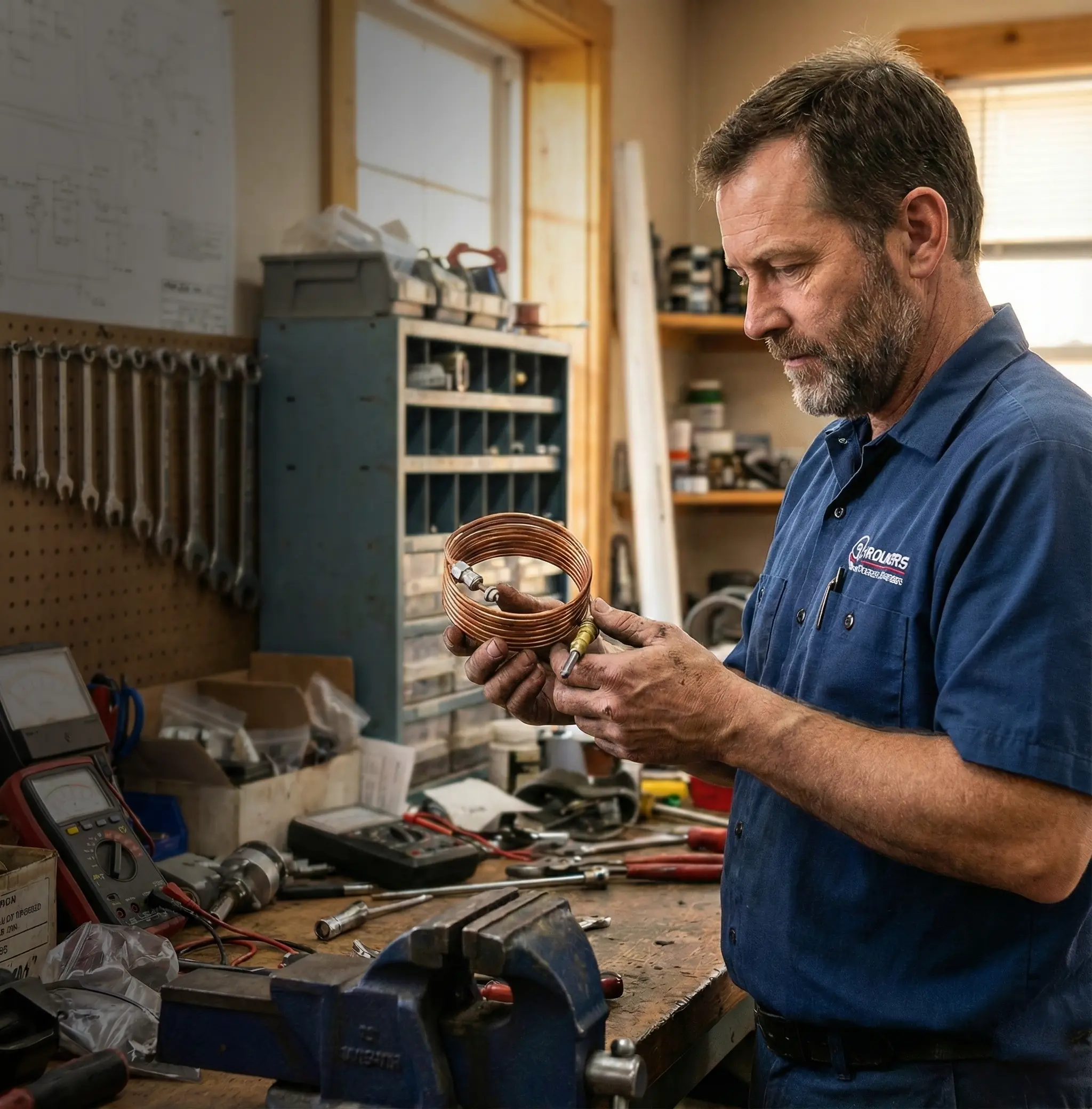
Because thermocouples are universal (mostly differing only by length), they are the easiest part to stock. Every service van should carry a few universal thermocouple kits (usually 18" to 48" lengths) to ensure you can get a unit running again in a single visit.
And if you need to resupply your truck, you're already in the right place: AllPointsFPS.com.