What is a Solenoid Valve in Commercial Fryers?
Feb 24th 2026
Reading Time: 2 Minutes

If you work on modern electronic ignition fryers (like Pitco Solstice or Vulcan VK series), you deal with solenoid valves constantly. But on older millivolt fryers, they were non-existent.
So, what exactly is the solenoid valve's job, and why is it the first thing you should check when a fryer calls for heat but stays cold?
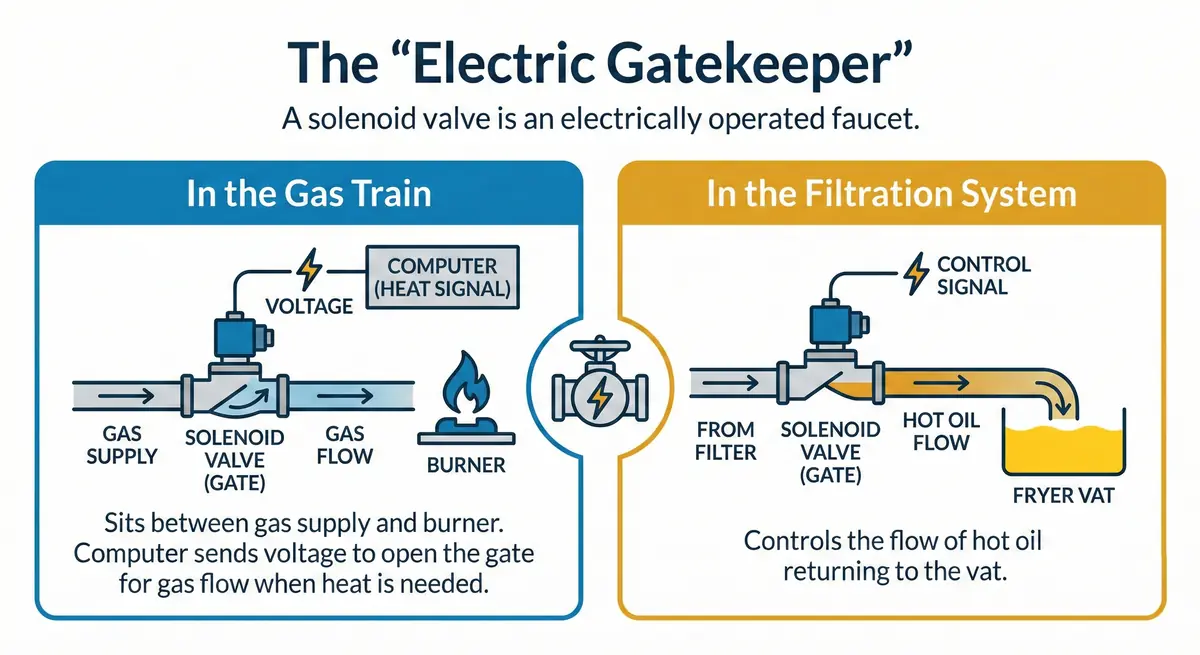
The "Electric Gatekeeper"
In simple terms, a solenoid valve is an electrically operated faucet.
- In the Gas Train: It sits between the gas supply and the burner. When the computer says "Heat," it sends voltage to the solenoid to open the gate and let gas flow.
- In the Filtration System: It controls the flow of hot oil returning to the vat.
How It Works (The Magnet Trick)
Inside the black box (coil) is a wire wrapping. Inside the tube is a metal plunger with a rubber seal.
- Power On: The thermostat sends 24V (or 120V) to the coil.
- Magnetism: The coil creates a magnetic field that physically pulls the metal plunger up.
- Flow: The plunger lifts off the seat, allowing gas or oil to pass.
- Power Off: The magnet stops, and a spring slams the plunger back down to seal the line.
Troubleshooting: The "Click" Test
Because it is mechanical, you can usually hear a solenoid working.
- Listen: When the fryer calls for heat, you should hear a distinct audible click.
- No Click? Check for voltage at the coil terminals.
- Voltage Present + No Click: The coil is burned out (open loop) or the plunger is physically stuck with grease.
- No Voltage: The issue is upstream (computer, high-limit, or wiring).
- Click + No Flame? The valve is opening, but the gas isn't flowing. Check for a clogged screen or supply pressure issues.
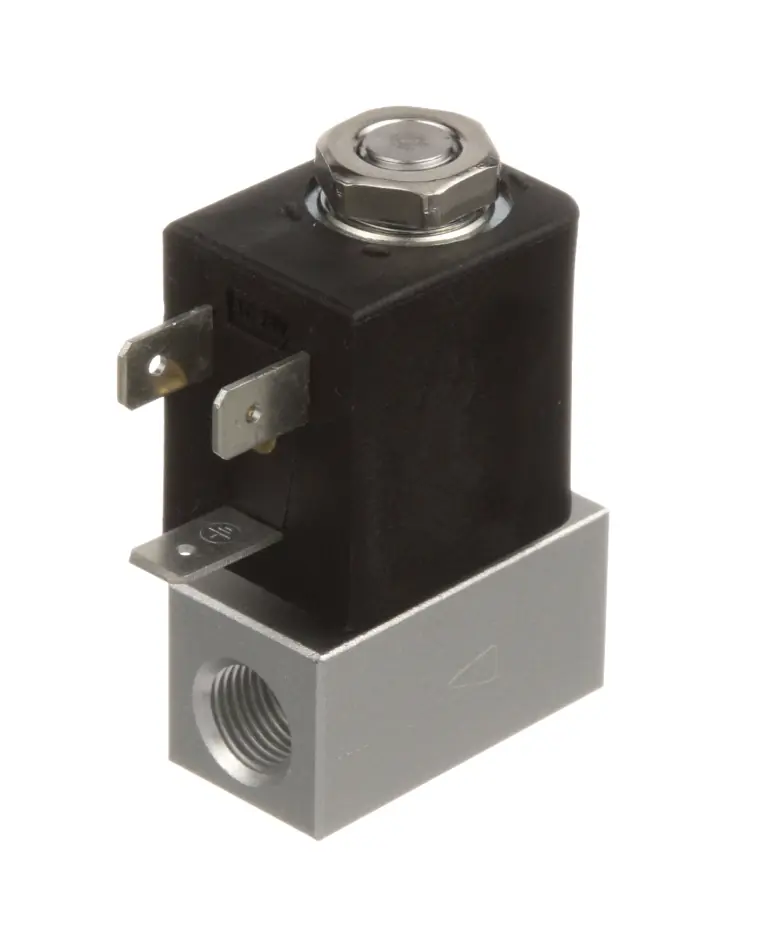
Need a Replacement?
Solenoid coils are a common failure point. AllPoints stocks OEM solenoid coils, OCM solenoid coils, and valve bodies that fit major brands — available for same-day shipping.