The Ultimate Restaurant Hood & Ventilation Safety Checklist
Jan 14th 2026
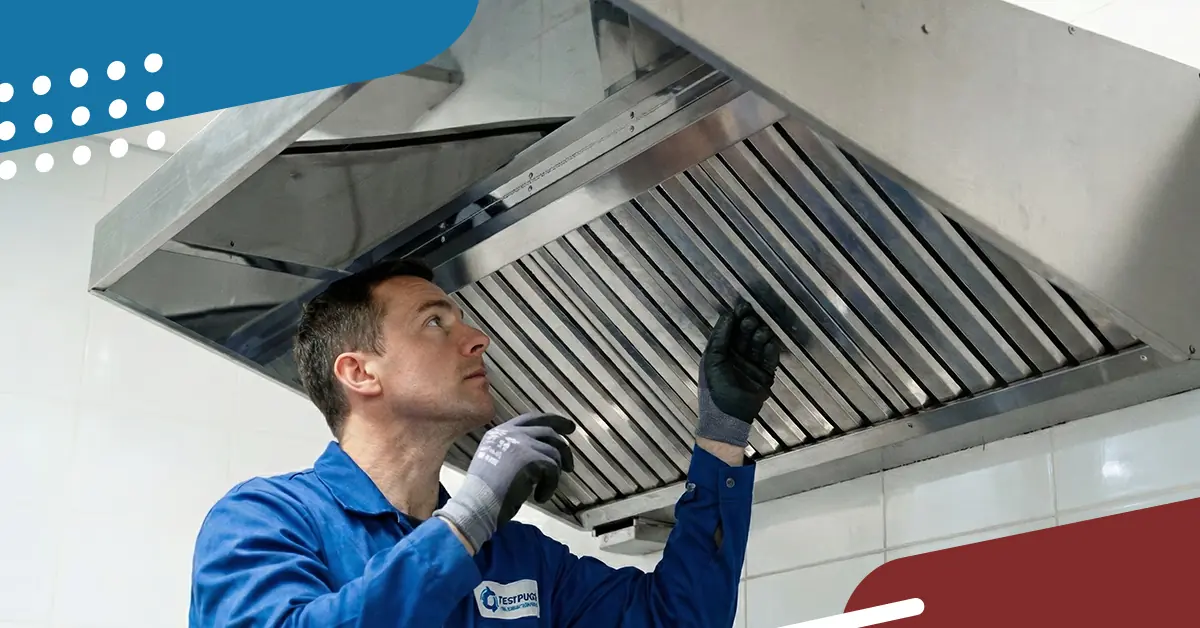
For a commercial kitchen, the ventilation system is the lungs of the operation. When it’s working, nobody notices. When it fails, you get smoke, unbearable heat, and, at worst, a grease fire that can shut a business down permanently.
For service companies, hood maintenance is a critical revenue stream and a vital service for your customers. It’s not just about cleaning, but the mechanical integrity and code compliance (NFPA 96) of a restaurant.
Use this checklist during your next preventative maintenance visit to ensure your customers remain safe, compliant, and operational.
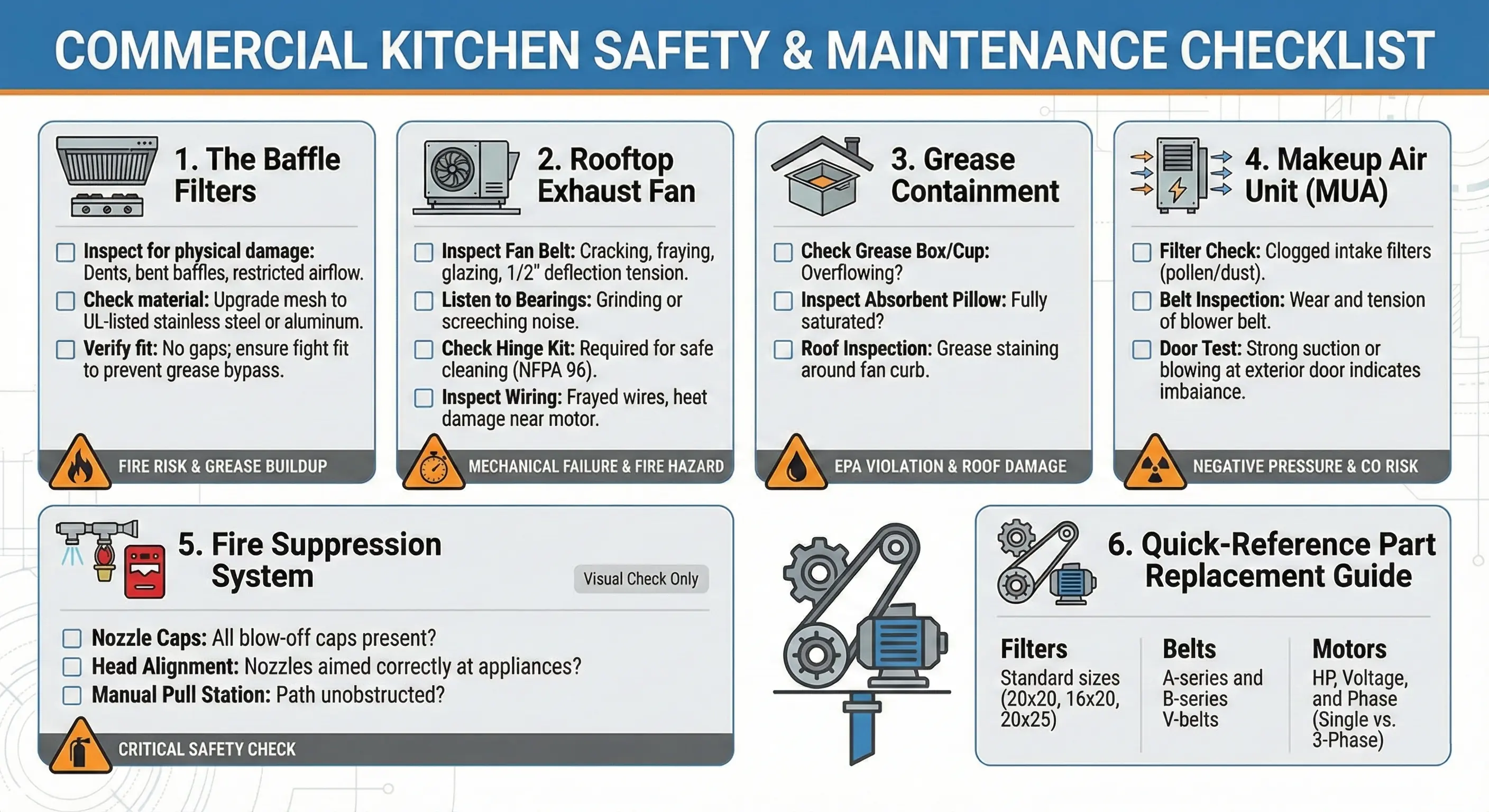
1. The Baffle Filters
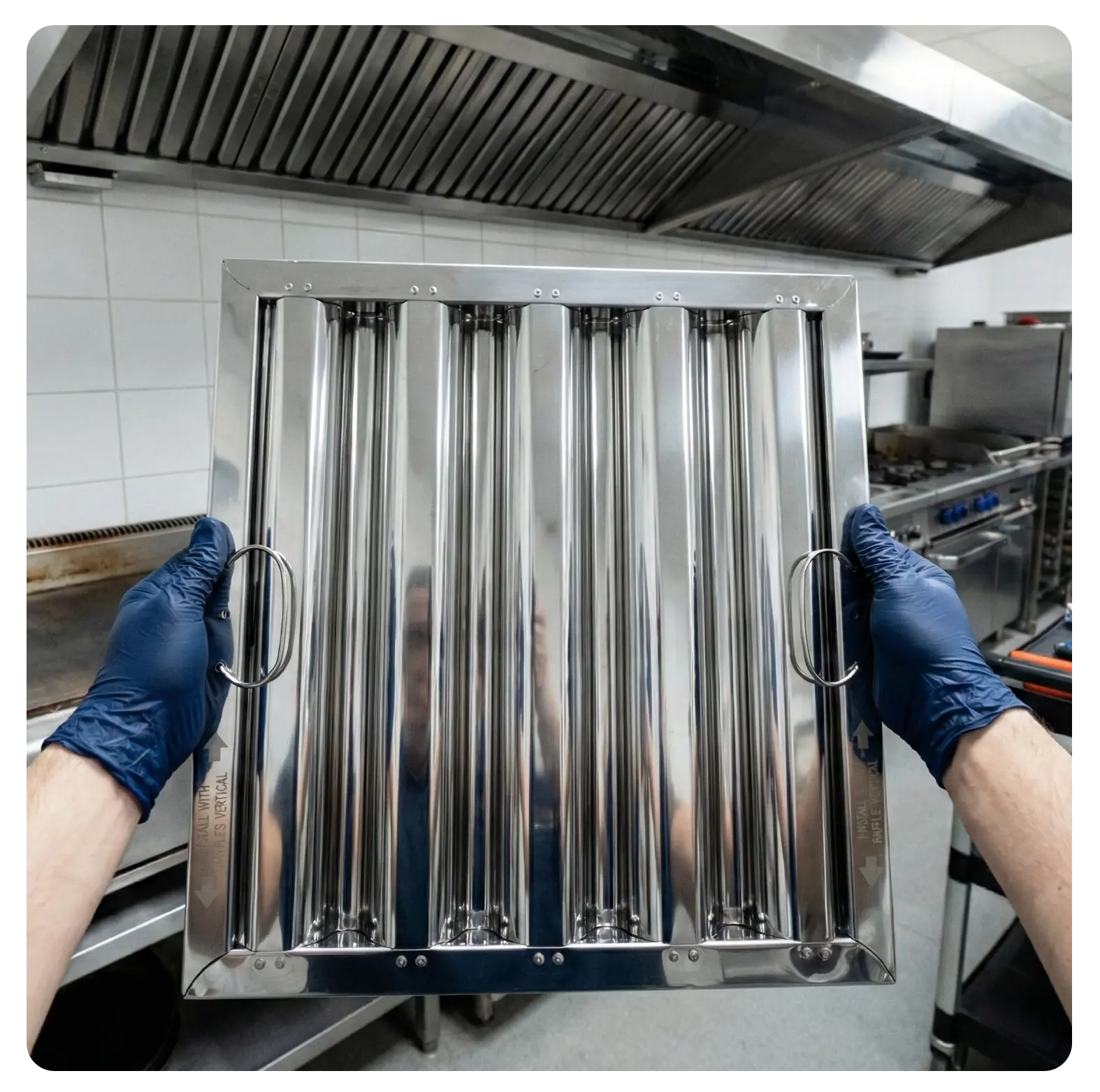
Grease filters are often neglected until they are completely occluded. Damaged or clogged filters allow grease to pass through to the ductwork, significantly increasing fire risk.
- Inspect for physical damage: Are there dents or bent baffles? If the baffles are bent, airflow is restricted, and grease extraction is compromised.
- Check the material: If the kitchen is still using mesh filters, recommend an upgrade to UL-listed stainless steel or aluminum baffle filters (mandatory in many jurisdictions).
- Verify fit: Gaps between filters allow grease-laden air to bypass the extraction system. Ensure filters fit tightly with no spacing.
2. Rooftop Exhaust Fan
The "out of sight, out of mind" problem usually happens here. A neglected rooftop unit is a ticking time bomb for mechanical failure.
- Inspect the Fan Belt: Check for cracking, fraying, or glazing. Press the belt to check tension (should have about 1/2" deflection). A loose belt reduces CFM (cubic feet per minute) airflow, leaving smoke in the kitchen.
- Listen to the Bearings: A grinding or screeching noise indicates bearing failure is imminent.
- Check the Hinge Kit: NFPA 96 requires exhaust fans to have a hinge kit for safe tipping during cleaning. If it’s missing, the fan is likely being damaged during cleaning services.
- Inspect Wiring: Look for frayed wires or heat damage near the motor conduit.
3. Grease Containment
Grease leaking onto a roof is an EPA violation and a fire hazard. It also destroys rubber roof membranes, leading to expensive leaks.
- Check the Grease Box/Cup: Is it overflowing?
- Inspect the Grease Absorbent Pillow: If the system uses a containment box with a pillow, is the pillow fully saturated?
- Roof Inspection: Look for grease staining around the base of the fan curb.
4. Makeup Air Unit (MUA)
A hood that pulls air out without putting air back in creates a "negative pressure" environment. This sucks heat out of the building and can cause pilot lights on water heaters to backdraft (carbon monoxide risk).
- Filter Check: Inspect the MUA intake filters. If they are clogged with pollen/dust, fresh air cannot enter.
- Belt Inspection: Check the MUA blower belt for wear and tension.
- Door Test: Slightly open the kitchen's exterior door. If there is strong suction pulling the door shut or blowing it open, the air balance is off.
5. Fire Suppression System
Note: Only licensed fire suppression technicians should tag the system, but you should perform a visual check.
- Nozzle Caps: Are all blow-off caps present on the nozzles? These prevent grease from clogging the fire suppression lines.
- Head Alignment: Are the nozzles aimed correctly at the appliances? (e.g., if the fryer was moved, is the nozzle still pointing at the vat?)
- Manual Pull Station: Is the path to the pull station unobstructed?
6. Quick-Reference Part Replacement Guide
If you flag an issue, be ready to fix it. Keep these common specs handy:
- Filters: Standard sizes (20x20, 16x20, 20x25).
- Belts: A-series and B-series V-belts.
- Motors: HP, Voltage, and Phase (Single vs. 3-Phase).
Need to restock your truck?
From heavy-duty fan belts and motors to UL-listed baffle filters and grease containment solutions, find everything you need to keep your customers' air moving at AllPointsFPS.com.