The Real Difference Between OEM and Aftermarket Foodservice Parts
Jan 20th 2026
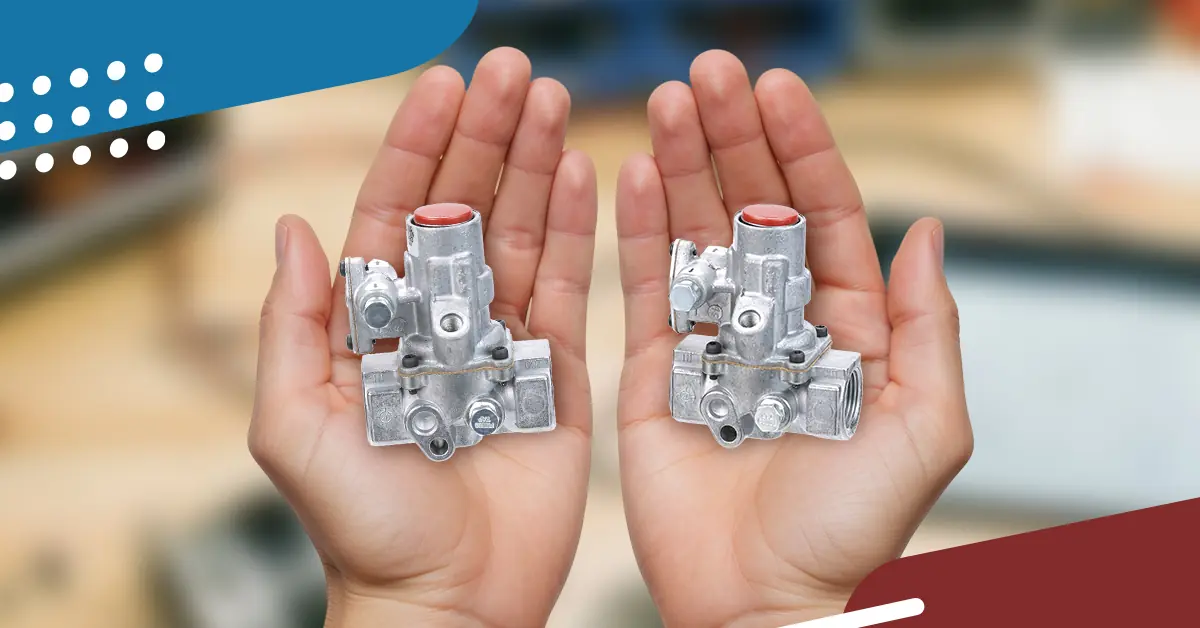
For Purchasing Managers, the debate between OEM (Original Equipment Manufacturer) and aftermarket parts is a daily balancing act.
On one side, you have OEM: The safe bet. You know it fits, you know it works, and you know the warranty is safe. But you also know it comes with a higher price tag and, lately, frustratingly long lead times.
On the other side, you have the aftermarket: The budget saver. But it comes with "installation anxiety." Will the bracket line up? Is the voltage tolerance the same? Will the technician have to return to the site because the part failed a week later?
The truth is, "aftermarket" is a broad term that often unfairly lumps high-quality components in with cheap knock-offs. To make the smartest buying decisions for your inventory, you need to distinguish between generic aftermarket parts and OCM (Original Component Manufacturer) parts. 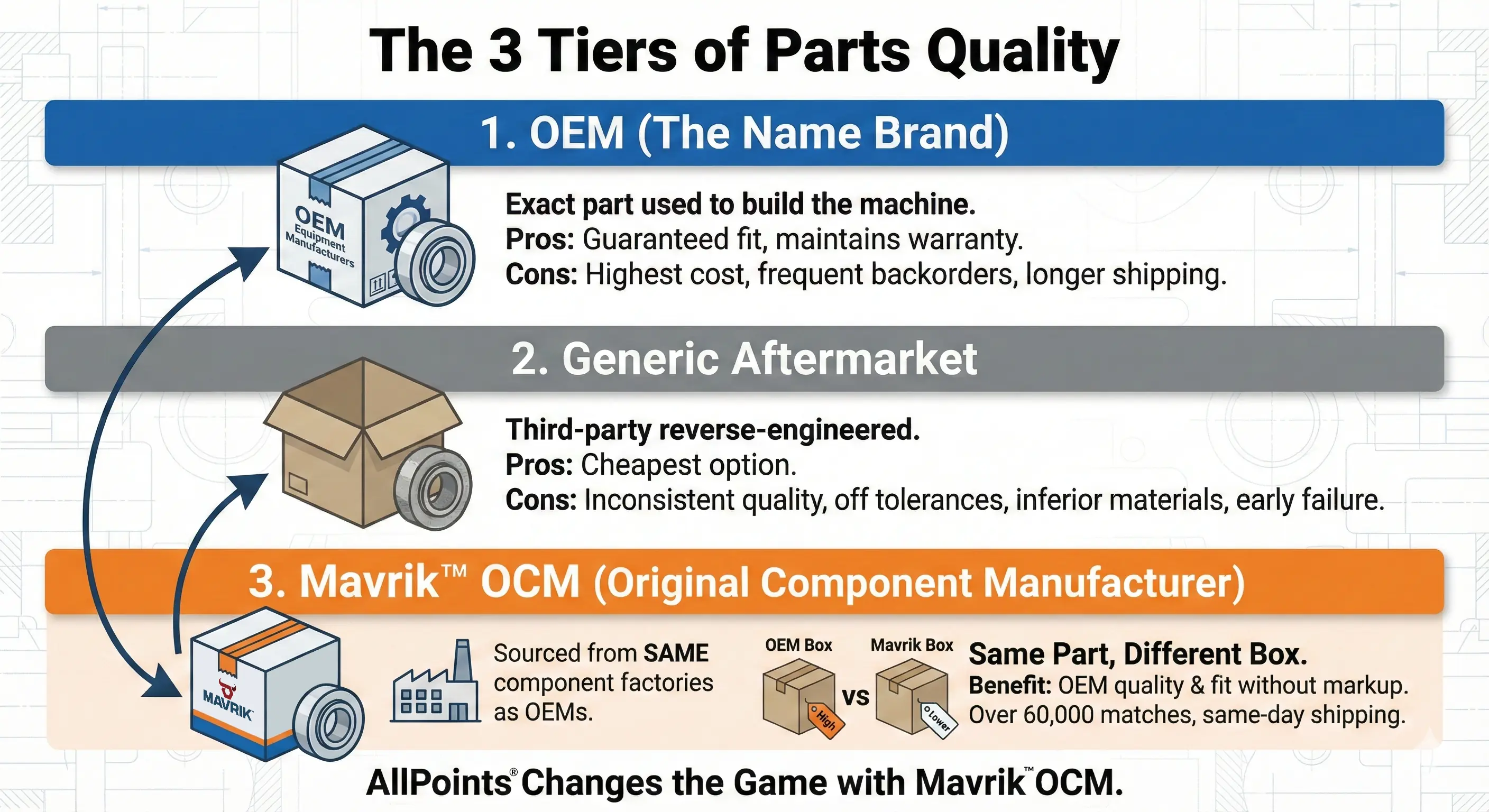
The 3 Tiers of Parts Quality
1. Original Equipment Manufacturer (OEM)
This is the part in the equipment manufacturer’s box. It is the exact part used to build the machine.
- Pros: Guaranteed fit, maintains equipment warranty.
- Cons: Highest cost, frequent backorders, and longer shipping times.
2. Generic Aftermarket
These are parts created by third-party companies that reverse-engineer the OEM part. They measure it and try to replicate it.
- Pros: Cheapest option.
- Cons: Inconsistent quality. Tolerances may be slightly off, causing installation headaches for your techs. Materials may be inferior, leading to early failure.
3. Original Component Manufacturer (OCM)
Most equipment manufacturers don’t make every single component inside their machines. They buy valves, switches, and motors from specialized component manufacturers, install them in their machines, and slap their logo on the boxes.
AllPoints sources these OCM parts from the same component factories as OEMs.
- The Difference: It’s the same part, from the same assembly line, but without the logo markup.
- The Benefit: You get OEM quality and fit without the OEM markup. Plus, because we stock over 60,000 OCM part matches, we often have the part available for same-day shipping even when the OEM is on backorder.
Why Purchasers Prefer OCM
For a purchasing manager, OCM parts solve the two biggest headaches: Availability and Reliability.
- No "Dead Ends": When the OEM part is 4 weeks out, the OCM equivalent is usually on the shelf.
- No Risks: Because it’s OCM quality, your technicians will know the part fits the exact machine it was made for.
The Verdict: When warranty compliance requires it, stick with OEM (we stock 185,000+ of those, too!). But for out-of-warranty repairs where speed and margin matter, OCM gives you the quality of OEM with the availability of the aftermarket.
Stocking up for the season?
Don’t let backorders slow down your technicians. Explore the full line of OCM parts at AllPointsFPS.com.