The 5% Rule: How to Boost Job Profitability Without Raising Prices
Dec 18th 2025
In the commercial service industry, the standard response to shrinking margins is almost always the same: raise the labor rate.
It’s a logical move. Fuel costs are up, technician wages are rising, and insurance isn't getting any cheaper. But there is a ceiling to what the market will bear. If you push your hourly rate too high, you risk losing long-standing contracts to the "low-bid" competitor down the street.
So, if you can’t raise the top line, how do you protect the bottom line?

Enter the 5% Rule.
The philosophy is simple: You don’t need to find one massive, game-changing win to become more profitable. You need to find 5% in efficiency gains across three specific areas of your operation. When combined, these small gains compound into a significant boost in net profit without changing the price your customer sees on the invoice.
Here is how smart service owners are finding that 5% right now.
1. The Procurement Spread (Buying Smarter, Not Cheaper)
Parts margin is often the most overlooked lever in a service business. Many companies operate on auto-pilot: the tech identifies a bad part, the buyer orders the OEM replacement, and you tack on your standard markup.
But this model leaves money on the table.
As a distributor, we see the backend of the industry. We know that many OEM parts are manufactured by third-party component makers. We source those same components (OCM) and sell them under the Mavrik brand for significantly less than the yellow or blue box.
The Math of Switching: Let’s say you have a standard 100% markup policy.
- The OEM Route: You buy a motor for $200. You bill the customer $400. Your gross profit is $200.
- The Mavrik Route: You buy the equivalent OCM motor for $160 (typically 20% less). Because it’s the same quality, you keep the customer price at $400. Your gross profit is now $240.
The Result: You just increased your gross profit on that line item by 20%, and the customer paid the exact same price. You didn't raise rates, but you made more money.
2. The "First-Time Fix" Factor
Data shows that only about 35% of technicians complete 5 or fewer calls in a single visit without needing to return. The other 65% are generating "callbacks."
A callback is a profit killer. It consumes fuel, vehicle wear-and-tear, and most importantly, billable hours that could have been sold to a new customer. If your tech has to drive back to install a part they didn't have on the truck, that job’s profitability often drops to zero.
Finding the 5% here means:
- Truck Stock Intelligence: Analyze your last 6 months of invoices. What are the top 10 parts your team ordered? If those aren't on every truck, you are inviting callbacks.
- The First-Time Part: Utilize tools like the AllPoints mobile app to verify schematics on-site. Guessing leads to returns, restocking fees, and downtime.
Reducing your callback rate by just 5% effectively unlocks hours of "free" labor capacity every week.
3. Reducing the "Research Drain"
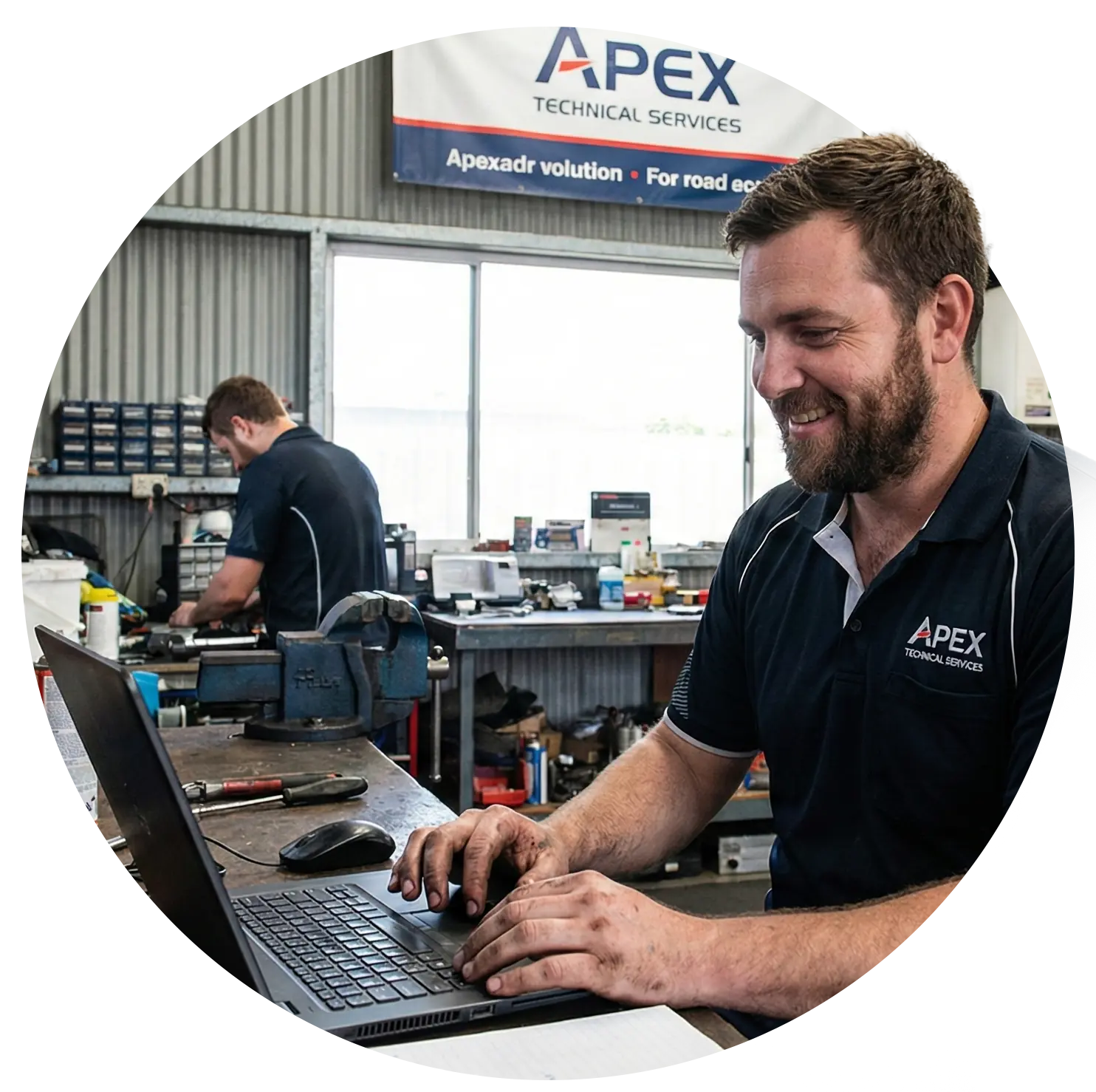
How much time does your purchasing manager (or your lead tech) spend scouring the internet for a part number?
We often see highly paid staff spending 30-45 minutes cross-referencing a grainy photo of a solenoid valve. If your overhead for that employee is $40/hour, that research just cost you $20-30 in sunk costs before the part is even ordered.
The Fix: Streamline the workflow. Use a "Saved Parts List" for your recurring customers (e.g., "Burger Chain A - Fryer Parts"). When an order comes in, it should be a 1-click process, not a research project.
By cutting administrative time by 5%, you free up your team to focus on high-value tasks, like scheduling more jobs or managing customer relationships, rather than chasing part numbers.
The Bottom Line
Profitability isn't always about charging more. It's about keeping more of what you earn.
By switching to high-quality OCM parts like Mavrik, reducing callbacks through better truck stock, and streamlining your ordering process, you can widen your margins immediately.
You don't need to reinvent your business model. You just need to find your 5%.
Want to audit your parts spending? Log in to your AllPoints account and compare your most frequently purchased OEM parts with their Mavrik equivalents. The savings might surprise you.