Optimizing Service Truck Stock: Balancing First-Time Fix Rates and Holding Costs
Sep 25th 2026
Reading Time: 4 Minutes
Summary
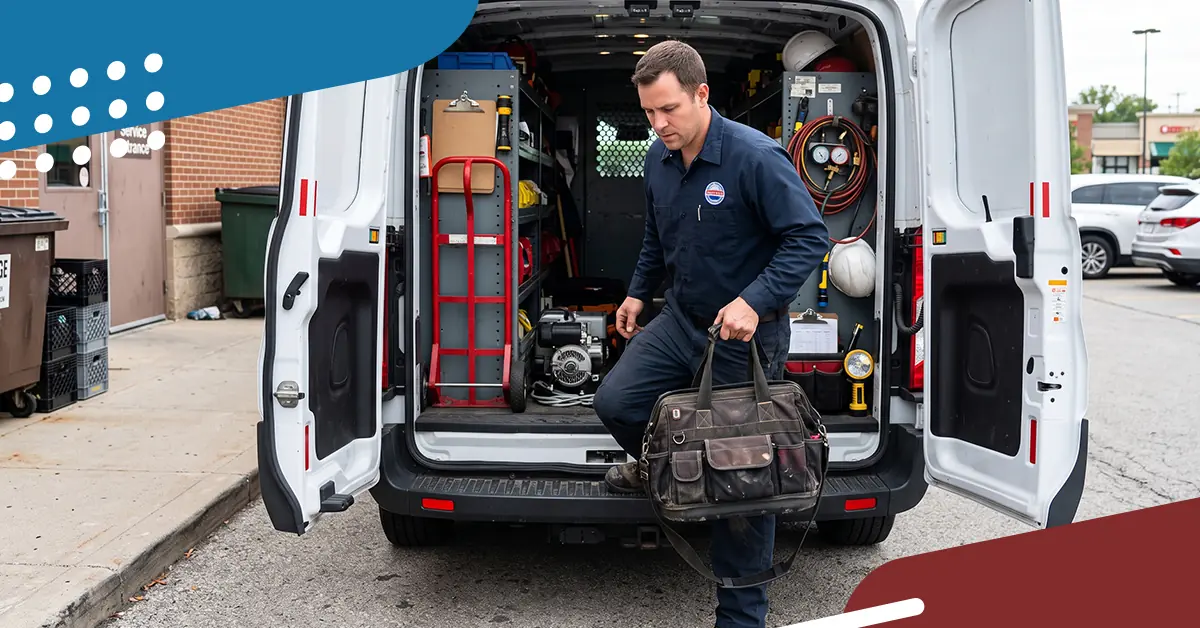
For commercial foodservice service agencies, field inventory represents a constant operational balance. Carry too little, and first-time fix (FTF) rates drop while callback costs soar. Carry too much, and working capital is tied up in slow-moving inventory exposed to damage, obsolescence, and shrinkage.
Service managers can optimize fleet inventory by:
Classifying truck stock by usage velocity, equipment coverage, and replacement frequency rather than technician intuition alone.
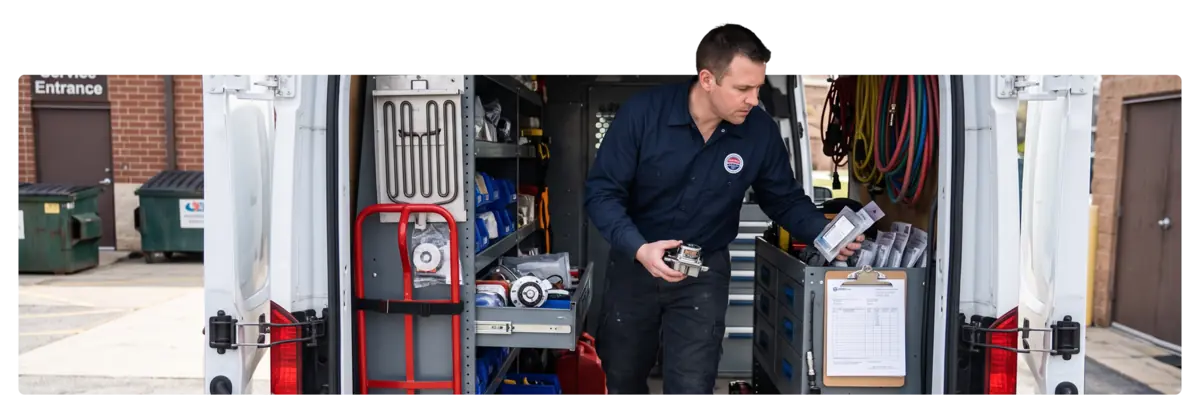
Establishing dynamic min/max stock thresholds tied to local customer equipment density and seasonal demand.
Utilizing verified Original Component Manufacturer (OCM) alternatives on compatible applications to balance inventory investment against repair coverage.
The Financial Reality of Field Inventory
First-time fix rate is among the most critical key performance indicators in commercial kitchen service. When a technician resolves a breakdown on the initial dispatch, labor efficiency improves, customer downtime is reduced, and the service organization avoids the additional costs associated with a return visit.
Every time a technician leaves a job site to retrieve a part from a local branch, or places a component on order for a return visit, profitability erodes.

Cost of Callback=(Drive Time×Labor Burden)+Vehicle Operating Cost+Dispatch Overhead+Lost Opportunity Margin
Each additional truck roll adds labor, fuel and vehicle costs, dispatch overhead, and lost capacity that could have been dedicated to another billable service call.
However, over-indexing on truck stock creates its own financial strain. Inventory carrying costs are often estimated at roughly 20% to 30% of inventory value annually, although actual rates vary by business, inventory mix, cost of capital, shrinkage, and storage requirements.
For a 15-van fleet carrying $8,000 in parts per truck, that represents $120,000 in field inventory and an estimated $24,000 to $36,000 in annual carrying costs. Excess stock also consumes valuable cargo space and exposes delicate electronic controls to road vibration and temperature swings.
The objective is not to build a mobile warehouse inside every van, but to maintain a disciplined inventory footprint that supports high completion rates without tying up excess capital.
Segmenting Inventory by Movement and Equipment Density
A common challenge in fleet management is letting technicians stock their vans based solely on personal preference or recent memory. While technician feedback is valuable, relying on intuition alone often results in trucks carrying slow-moving, high-dollar components "just in case" while frequently stocking out of fast-moving wear items.
High-performing service operations segment their truck inventory into three distinct operational tiers:
| Inventory Tier | Part Categories | Stocking Strategy | Replenishment Approach |
|---|---|---|---|
| Tier 1: High-Turnover Consumables | Fuses, terminal ends, high-temp wire, standard 1-pole and 2-pole contactors, 30mV thermocouples, universal relays. | Standardized across all fleet vehicles regardless of technician specialty. | Frequent replenishment from central stock or branch pickup. |
| Tier 2: Regional Platform Parts | Specific pilot assemblies, thermopiles, commercial disposer gaskets, hot-gas coils, combination gas valves. | Tailored to the density of installed equipment across each technician’s designated route. | Periodic cycle counts and automated reordering via ERP integration. |
| Tier 3: Specialized & High-Cost Assemblies | Main electronic control boards, compressors, multi-port combi boiler manifolds, pass-through dishwasher motors. | Typically staged at a central warehouse or regional hub rather than routinely stocked on vans. | Ordered per diagnostic dispatch or planned PM agreement. |
Establishing Dynamic Min/Max Replenishment
Static inventory lists become obsolete as customer equipment populations, service contracts, and seasonal demands shift. To keep van stock lean and relevant, fleet operations should use dynamic replenishment controls:
- Evaluate Movement Velocity Regularly: Review slow-moving truck stock at regular intervals. Parts with little or no usage should be evaluated against equipment density, component criticality, replacement lead time, and historical demand before being returned to central depot inventory.
- Account for Seasonal and Regional Demand: Review historical service-call patterns for each market and adjust truck stock ahead of predictable demand shifts. A cold-side-heavy region, for example, may warrant additional refrigeration components ahead of peak cooling season.
- Automate Replenishment Triggers: When a technician logs a part to a completed work order, the field service management (FSM) or inventory system should update the van's on-hand quantity and trigger replenishment when stock reaches the established reorder threshold.
Using OCM to Extend Truck-Stock Coverage
Acquisition cost is another variable service managers can use to balance inventory coverage against the capital tied up in each van.
For compatible applications, verified Original Component Manufacturer (OCM) parts can meet the fit, function, and performance requirements of the repair at a lower acquisition cost than OEM alternatives. Sourcing verified OCM components through AllPoints can deliver an average of 15% savings compared with OEM alternatives.
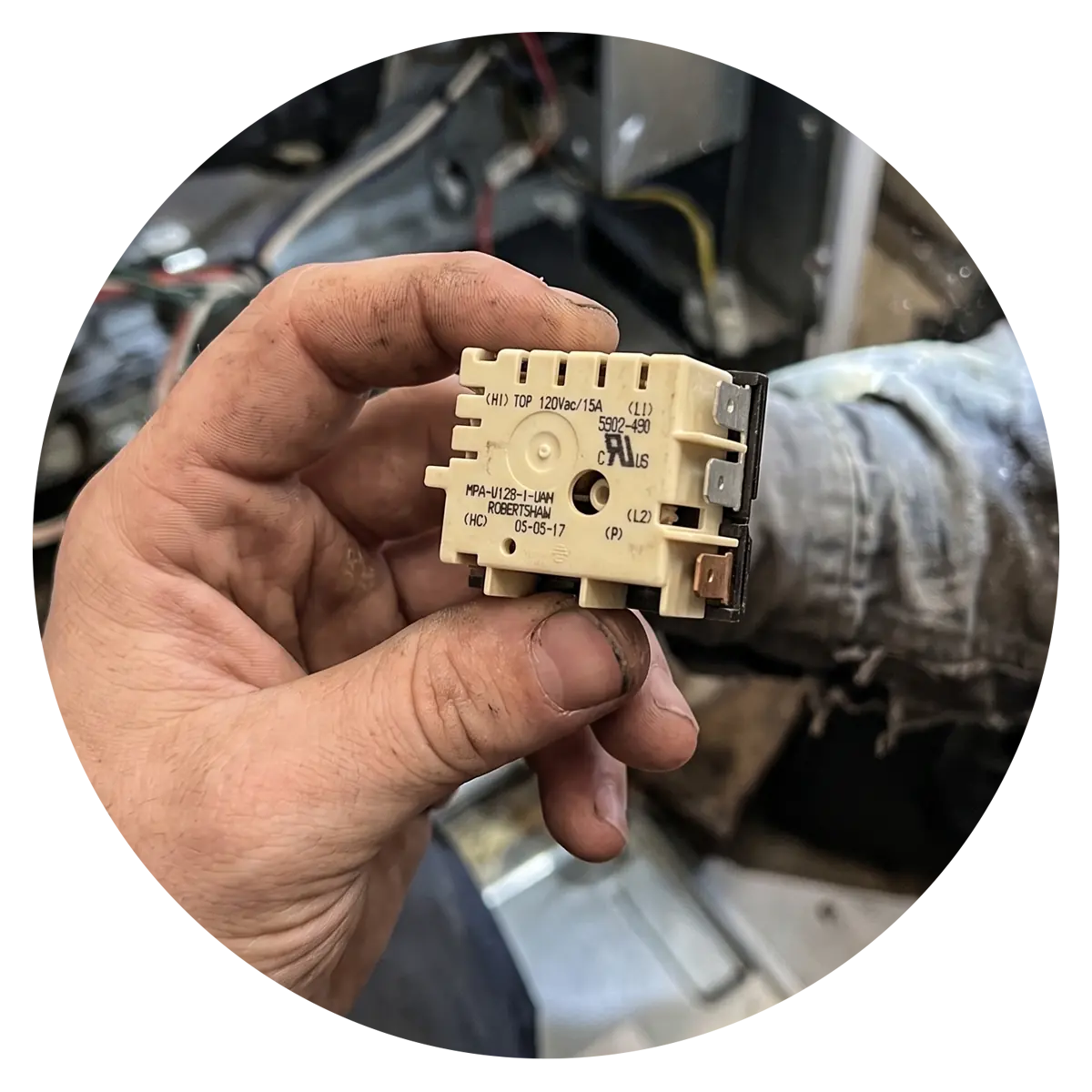
Using OCM strategically for compatible, out-of-warranty applications can reduce the capital tied up in commonly stocked replacement components, allowing service agencies to expand repair coverage without increasing truck-stock investment at the same rate. Where specifications and applications allow, versatile OCM switching and control components may also consolidate multiple application-specific part numbers into fewer truck-stock SKUs.
Three Best Practices to Control Shrinkage
Parts that sit on a truck are vulnerable to physical damage and unrecorded movement before they ever reach a customer's equipment:
- Protect Sensitive Electronics: Control boards and digital sensors must remain in sealed packaging. Store electronic stock in designated, padded bins away from heavy iron pipe fittings and liquid chemicals.
- Enforce Core Return Protocols: For rebuildable or warrantied parts, require technicians to place the failed component into the replacement part's packaging immediately, attaching the associated work order ticket before returning it to the depot.
- Conduct Regular Blind Audits: Implement randomized cycle counts on a rotating subset of vans each week. Blind counts (where the auditor does not see the software's on-hand quantity) identify discrepancies early and deter unrecorded truck-to-truck inventory transfers.
Frequently Asked Questions
What is an acceptable first-time fix rate for commercial foodservice service fleets?
There is no universal first-time fix target for every commercial foodservice service operation. Equipment mix, technician specialization, geography, customer contracts, and how an organization defines a first-time fix can all affect the rate. The most useful approach is to establish a consistent internal definition, track performance over time, and evaluate whether additional truck inventory produces enough improvement in completed first visits to justify its carrying cost.
How much inventory value should be carried on a standard service van?
There is no single ideal dollar value for service-van inventory. The right investment depends on equipment mix, route density, service specialization, parts availability, replenishment lead times, and customer response-time requirements. Rather than targeting a fixed dollar amount, service managers should measure inventory turnover, first-time fix performance, stockouts, and carrying cost together.
How should truck-to-truck parts transfers be managed?
Truck-to-truck transfers should be documented in the FSM software before parts change hands. If mobile software does not support direct field transfers, parts should be routed through an expedited depot transfer protocol to maintain accurate truck-level visibility.
Drive Fleet Efficiency and Protect Margins
Optimizing your service truck stock requires balancing first-time fix capability with disciplined inventory control. Use the AllPoints Parts Catalog and Technical Resources to identify high-velocity OCM replacements, consolidate truck-stock SKUs, and lower your fleet's carrying costs without compromising service performance.