Mid-Year Sourcing: Avoiding the Post-Memorial Day Parts Crunch
Jun 22nd 2026
Reading Time: 4 Minutes

The weeks immediately following Memorial Day mark the highest volume spike for commercial kitchen equipment failures due to sudden summer ambient heat and peak seasonal traffic. Commercial kitchen operations can avoid the resulting post-Memorial Day parts crunch, backorders, and extended downtime by shifting from reactive purchasing to proactive inventory management. Standardizing on universal Original Component Manufacturer (OCM) parts stabilizes supply chains, protects repair margins, and reduces the risk of extended kitchen shutdowns.

Why Does the Post-Memorial Day Parts Crunch Occur?
The post-Memorial Day parts crunch is a predictable supply chain bottleneck caused by the simultaneous arrival of peak summer volume and soaring kitchen temperatures. Memorial Day weekend traditionally kicks off the busiest season for the foodservice industry, straining back-of-house hardware that may have run on lighter loads during the winter and spring months.
When ambient kitchen temperatures rise, refrigeration compressors (A direct category or product page would be preferable to a search results URL) must run longer duty cycles to maintain food safety parameters. Similarly, hot-side equipment like fryers and charbroilers face sustained operational hours. Components that were already wearing down inevitably fail under this peak thermal and mechanical stress. Because thousands of restaurants experience these failures simultaneously, OEM supply networks routinely experience regional stockouts and shipping delays during June and July.
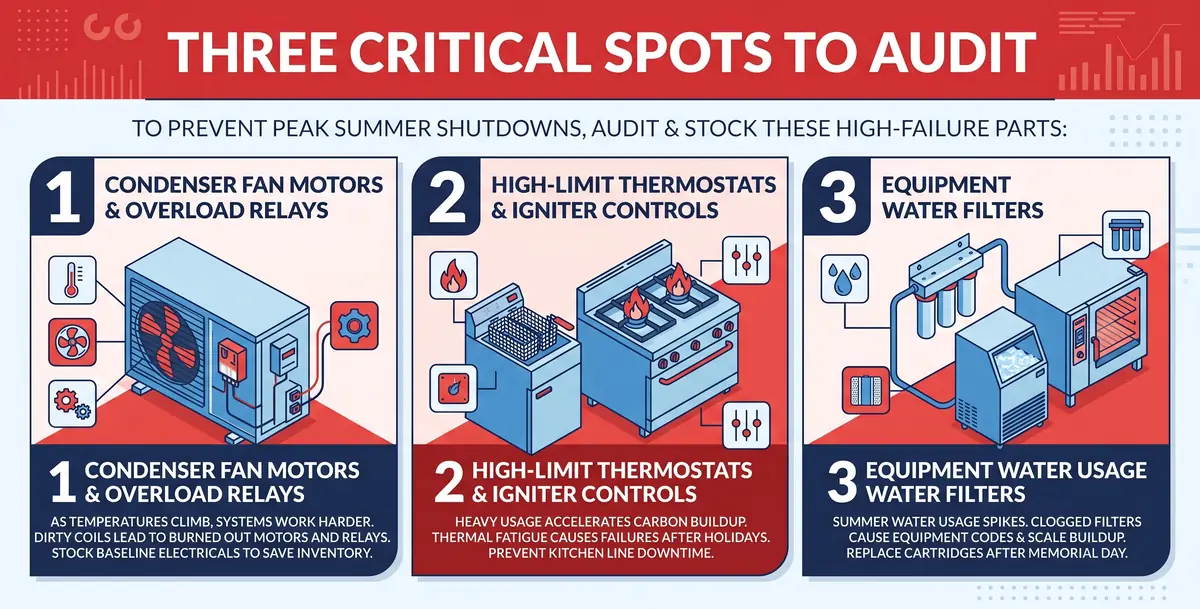
Three Critical Spots to Audit
To prevent long equipment shutdowns during peak summer revenue weeks, procurement managers and service operations should proactively audit and stock parts in these three high-failure categories:
1. Condenser Fan Motors and Overload Relays
As outdoor and kitchen temperatures climb, commercial refrigeration systems must work harder to reject heat. condenser coil is slightly dirty, the fan motor must draw more amperage to keep up. This extra draw burns out fan motors start capacitors, and compressor overload relays. Keeping a baseline inventory of these cold-side electricals prevents a failed $50 part from spoiling thousands of dollars in walk-in inventory.
2. High-Limit Thermostats and Igniter Controls
With commercial kitchens operating at maximum capacity, hot-side equipment failures can immediately cripple a line. Heavy usage accelerates carbon buildup on fryer high-limits and burner igniters.. These components frequently fail right after a holiday weekend due to thermal fatigue, leaving kitchens scrambling for replacements during a peak production month.
3. Equipment Water Filters
Summer water usage spikes nationwide, which can loosen sediment in municipal water lines and clog equipment filters much faster than winter usage. When water filters (A direct category or product page would be preferable to a search results URL) clog, ice machines throw freeze-timeout codes and combi ovens develop heavy scale buildup. Replacing filtration cartridges immediately after Memorial Day protects your primary kitchen assets from water-starvation failures.
Balancing Your Inventory
To navigate mid-year supply chain strain efficiently, procurement teams should utilize a balanced parts strategy that leverages both OEM and Original Component Manufacturer (OCM) networks:
| Sourcing Challenge | Proactive Procurement Action | Strategic Impact |
|---|---|---|
| OEM Backorders | Search the OEM part number to find exact-match OCM parts for high-failure items. | Bypasses branded factory delays and gets the exact same factory-built component to the job site faster. |
| Tight Service Margins | Shift out-of-warranty truck stock to universal OCM categories (e.g., contactors, relays).. | Lowers cost of goods sold (COGS) by an average of 15% without reducing equipment reliability. |
| Warranty Compliance | Maintain a dedicated, separate inventory of branded OEM parts for active equipment warranties. | Ensures full compliance with active manufacturer warranties while avoiding mixed-up inventory. |
Frequently Asked Questions (FAQs)
What is the difference between an OCM part and an aftermarket knock-off?
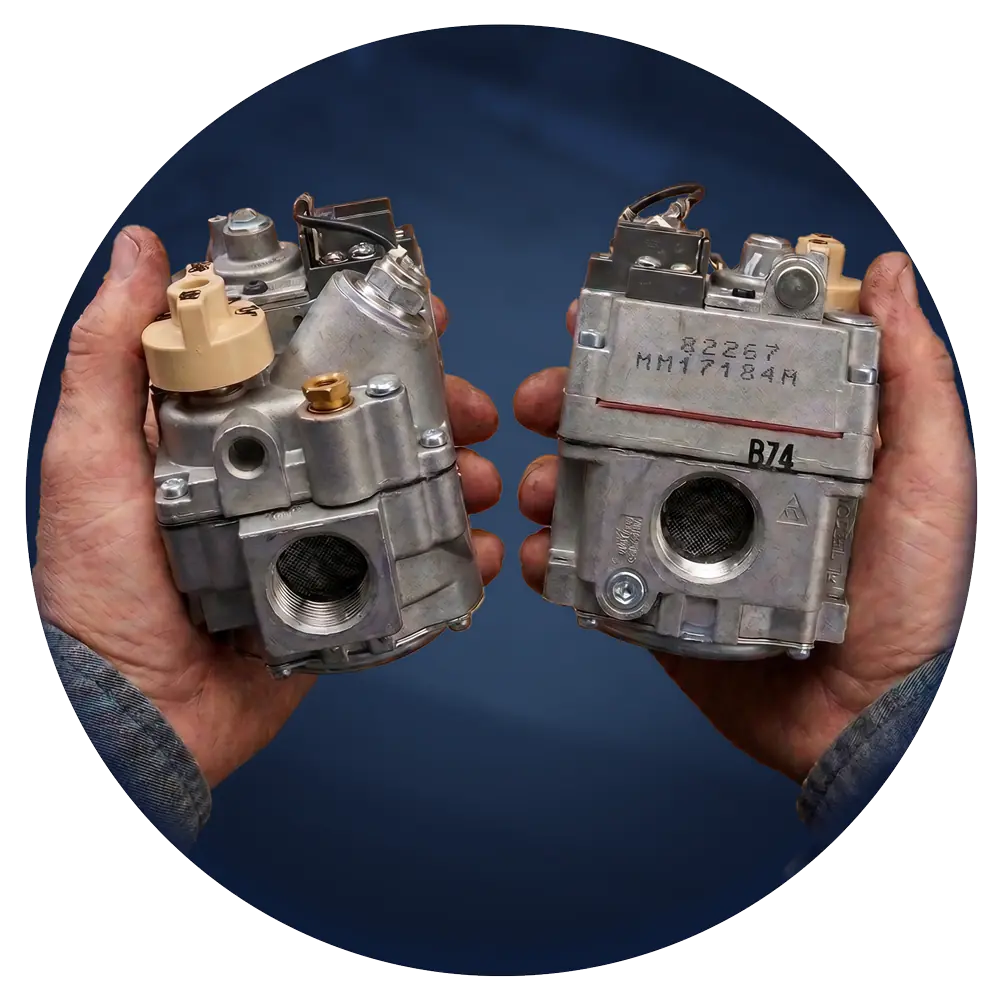
An Original Component Manufacturer (OCM) part is built in the exact same factory, using the identical engineering specifications, blueprints, and materials as the OEM part. It simply enters the market without the equipment manufacturer's branded box and markup.
An aftermarket part, on the otherhand, is a third-party reverse-engineered copy that may not share the same tolerances, material grades, or safety certifications.
How can a service company predict what to stock for the mid-year rush?
Service companies should audit their work order data from the previous six months to identify their top 20 highest-volume replacement parts. Standardizing those top 20 items around multi-brand compatible OCM parts allows a service fleet to cover the vast majority of summer breakdowns while using less warehouse and truck shelf space.
Will using an OCM part void an equipment warranty?
For equipment under an active manufacturer's warranty, you should always use the branded OEM part to ensure compliance with the factory's specific warranty terms. However, for out-of-warranty equipment, using an OCM part provides the exact same factory performance, dimensions, and safety standards for an average of 15% less cost.