How To Troubleshoot A Commercial Refrigerator That's Not Cooling
Jan 6th 2026
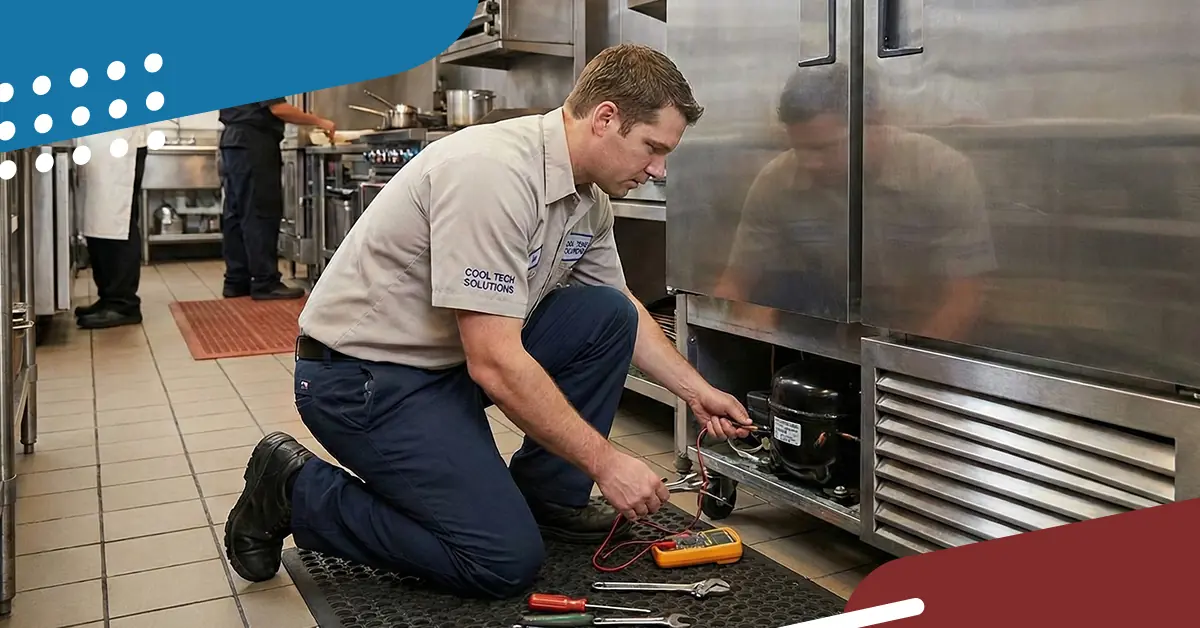

It’s 2:00 PM on a Friday. Three customers are waiting, and you just walked into a hot kitchen with a reach-in cooler reading 60°F. The manager is hovering, asking, "How long will this take?"
You’ve run this service call a hundred times, but when the pressure is on, it’s easy to get tunnel vision and dive straight into the complex diagnostics. Before looking up gauges and checking superheat, let's rule out the simple variables.
This is a quick field refresher. Before you start tearing into the sealed system, run this 5-minute pre-fix check to save time and avoid a callback.
1. The "Manager Variable"
Before you touch the unit, look at the room.
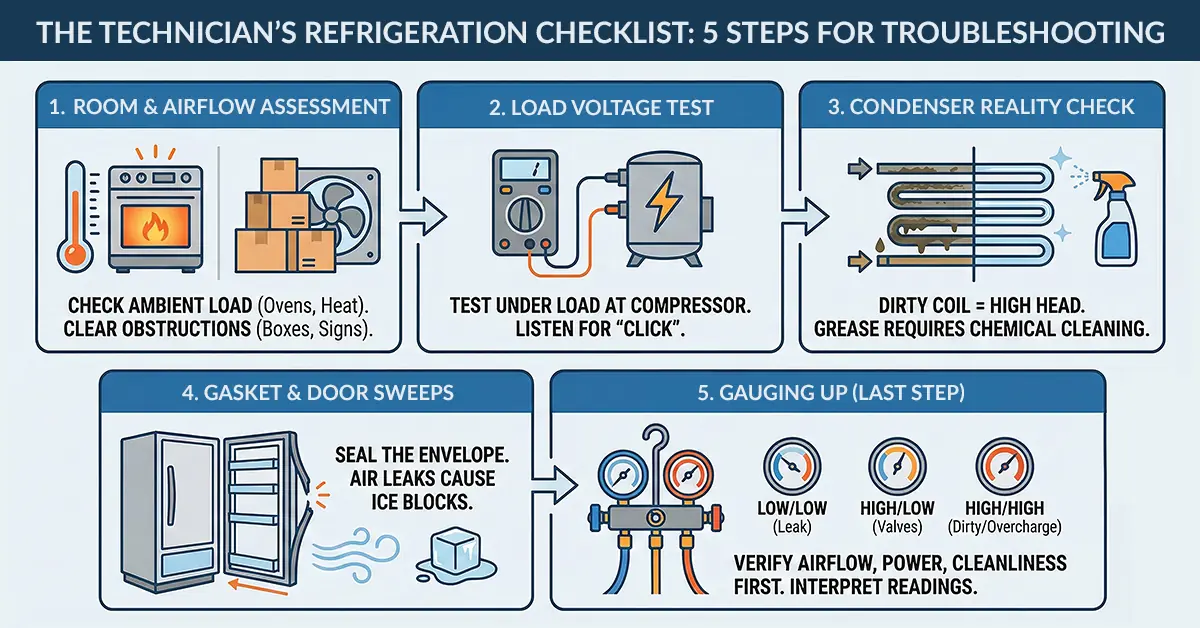
- Ambient Load: Is the unit sitting next to a 500°F oven or a steamer venting right into the intake? If the ambient temperature is exceeding the condenser’s design limits (usually 100°F+), the equipment isn't broken. It's suffocating.
- Airflow Restrictions: We’ve all seen boxes stacked to the ceiling blocking the evaporator fans or a "wet floor" sign shoved against the condenser intake. Clear the airway before you grab your meter.
2. The Voltage Drop
Don't trust the wall. Before you condemn a compressor, confirm you have proper voltage under load.
- Check at the compressor terminals, not just the outlet. A loose connection in the junction box or a pitted contactor can show 120V/208V static but drop significantly when the compressor tries to start.
- The "Click" Test: If you hear the overload clicking, verify your start components (relay, capacitor) and check the windings to ground immediately.
3. The Condenser Reality Check
You know this, but it bears repeating: A dirty coil is the #1 cause of high head pressure.
- Even a thin layer of grease acts as an insulator. If the liquid line is scorching hot and your head pressure is through the roof, don't assume a restriction in the system yet.
- Pro Tip: If the coil is impacted with grease, chemical cleaning is the only repair. Brushing it off just pushes the dirt deeper.
4. Gaskets and Door Sweeps
If the unit is running 100% of the time but not satisfying the stat, check the envelope.
- Gasket: If the gasket isn't grabbing, the unit is trying to cool the whole kitchen.
- Sweep: On walk-ins, a missing sweep allows constant infiltration of humid air, which leads to...
- Freeze: If the coil is a block of ice, check the defrost timer/heater, but also check for air infiltration. You can replace the defrost termination switch, but if the door seal is bad, you'll be back next week for the same ice block.
5. Gauging Up
Only after you’ve verified airflow, power, and cleanliness should you pierce the system.
- Low Suction / Low Head: Check for a leak. Look for the tell-tale oil spots.
- High Suction / Low Head: Check for inefficient compressor valves.
- High Suction / High Head: Check for a dirty condenser (again) or an overcharge if someone else was there before you.
The Bottom Line
Your time is your most valuable asset. Following a strict diagnostic path keeps you efficient and keeps the callbacks at zero.
Need a specific part to finish the job? Whether it’s a specific OEM compressor, a start component kit, or just a new set of gaskets, AllPoints has the inventory ready to ship so you can complete the ticket and move to the next job.