How to Source Replacement Contactors and Relays for Commercial Kitchen Equipment
Nov 9th 2026
Reading Time: 7 Minutes
Summary
High-demand commercial kitchen equipment like electric fryers, conveyor ovens, and commercial dishmachines places continuous thermal and electrical stress on switching components. When a contactor or power relay fails, simply matching physical dimensions is not enough to ensure a safe or lasting repair.
Service technicians and parts buyers can avoid premature failures and return trips by:
- Matching the contactor's specific application ratings for resistive heating or inductive motor loads.
- Verifying control coil operating voltage, inrush demand, and auxiliary switch configurations.
- Confirming terminal styles, physical mounting footprints, and safety certifications before ordering.
Few electrical components in a commercial kitchen work harder than heavy-duty contactors and power relays. In high-demand equipment like electric fryers, conveyor ovens, and commercial dishmachines, these components repeatedly switch substantial electrical loads throughout the day.
Every time contacts separate under load, an electrical arc occurs. Over time, that arcing erodes contact surfaces, increases electrical resistance, and generates heat. When a contactor fails, technicians face immediate pressure to restore operation.
However, sourcing a replacement switching control under tight turnaround times carries serious operational risks. Installing a contactor without verifying its specific load ratings, coil voltage, and duty limits can quickly cause premature failure or equipment damage. Getting the repair right requires understanding how commercial switching components are rated and cross-referenced.
⚠️ Electrical Safety & Energy Control
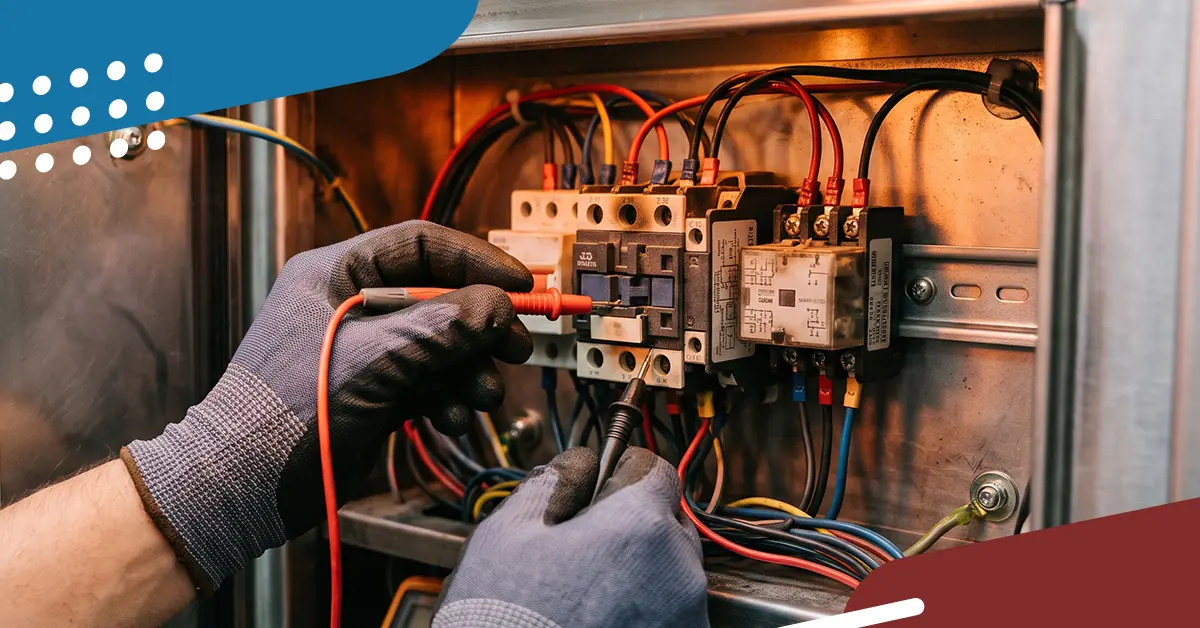
Diagnostic and replacement procedures involving line-voltage commercial kitchen equipment must be performed only by qualified commercial service technicians. Disconnect and lock out main electrical power following OSHA Lockout/Tagout (LOTO) protocols before inspecting, testing, or replacing electrical controls. Verify that all circuits are de-energized with a calibrated multimeter before touching wiring or terminals.

1. Resistive vs. Inductive Load Ratings
The most critical specification on any switching control is its contact load rating. A common sourcing error is selecting a contactor based strictly on a single amperage label without confirming the load type it is rated to handle.
Electrical loads in commercial kitchens fall into two primary operational classes:
| Load Category | Common Kitchen Applications | Key Rating Specifications | Utilization Category (IEC) |
|---|---|---|---|
| Resistive (Non-Inductive) | Electric fryer wells, griddle elements, booster heaters, warming cabinets. | Resistive Amps / Non-Inductive Amps (at rated line voltage). | AC-1 (Non-inductive or slightly inductive loads, resistance furnaces). |
| Inductive (Motor / Compressor) | Convection blower motors, dishmachine wash pumps, refrigeration compressors. | Full Load Amps (FLA) and Locked Rotor Amps (LRA). | AC-3 (Squirrel-cage motors: starting, switching off during running). |
- Resistive Ratings: Electric heating elements present a steady, largely non-inductive load. Contactors for these circuits must be evaluated by their Resistive Amps rating at the equipment's operating line voltage (typically 208V, 240V, or 480V).
- Inductive Ratings: Motors and compressors draw significant inrush current during startup. For these circuits, the control must be rated to handle the equipment's documented FLA and LRA demands.
- Definite Purpose (DP) vs. Industrial Contactors: Definite-purpose contactors are commonly used in HVAC and foodservice equipment, while IEC and NEMA industrial contactors offer additional configurations and application-specific ratings. When selecting a replacement, compare the manufacturer's published electrical and mechanical endurance ratings rather than relying solely on the general contactor classification.
For balanced three-phase resistive heating circuits with a unity power factor, calculated line current provides an initial baseline:
I=3×VLLP
Where I is line current in amperes, P is total three-phase power in watts, and VLL is line-to-line voltage. This calculation serves as an engineering starting point, not a substitute for the equipment data plate or manufacturer sizing documentation.
2. Control Coil Specifications and Inrush Demand
A contactor's main contacts may carry the required line amperage, but the component will not function reliably if the electromagnetic coil does not match the equipment's control circuit.
- Coil Voltage and Frequency: Verify nominal control voltage (commonly 24 VAC, 120 VAC, or 208/240 VAC; 50/60 Hz). Installing a 120V coil on a 24V control circuit prevents the contactor from pulling in, while applying 120V to a 24V coil causes rapid coil burnout.
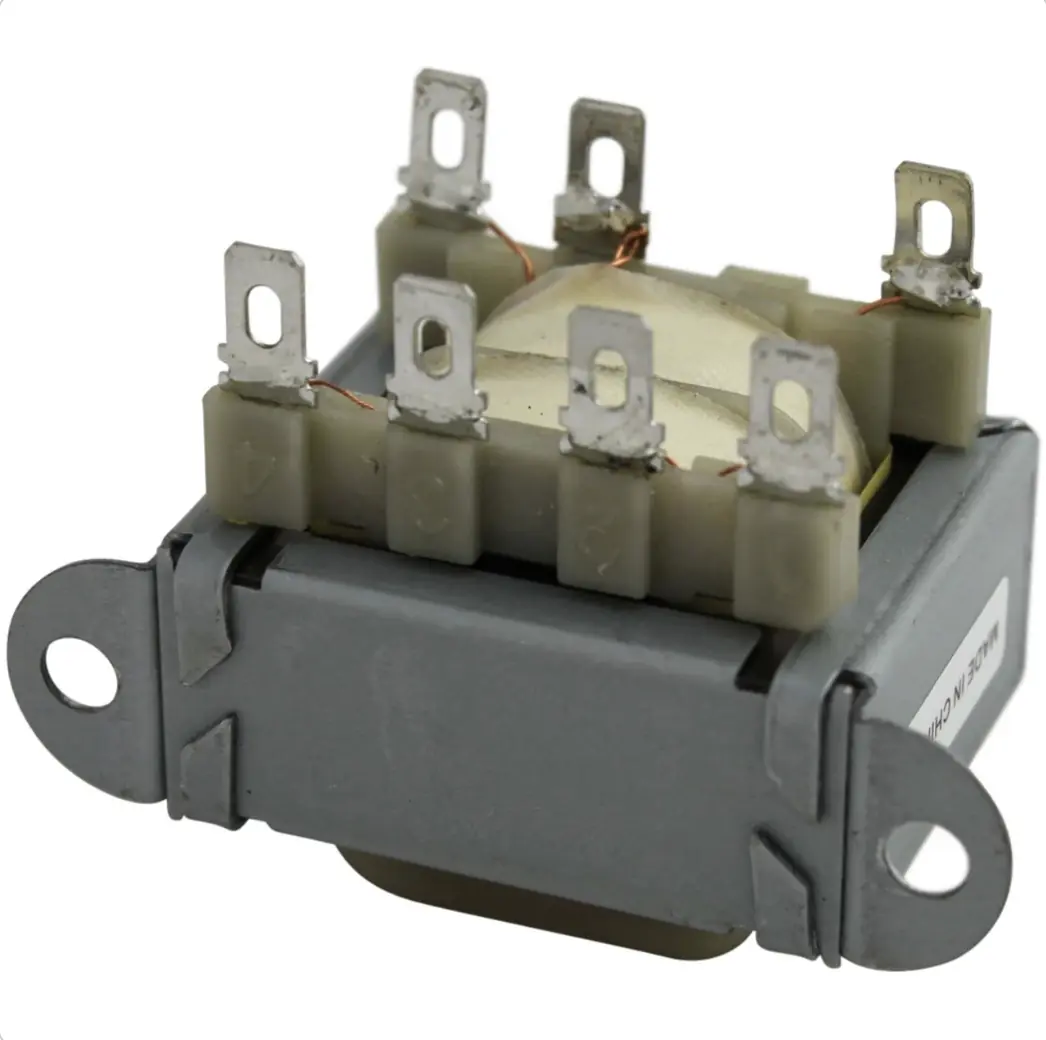
- Inrush vs. Sealed VA: Contactor coils draw higher current during the initial fraction of a second when pulling the armature in (Inrush VA) than they do to hold the armature closed (Sealed or Holding VA). If equipment utilizes a step-down control transformer, verify that the transformer's volt-amp (VA) capacity can supply the simultaneous inrush demand of all active contactor coils.
- Electronic Board Control: Modern commercial appliances often switch contactor coils via digital control boards or solid-state outputs. Compatibility depends on the board's output ratings and whether transient voltage suppression is required to protect sensitive electronics when the coil de-energizes.
3. Physical Configuration, Terminals, and Auxiliary Contacts
Beyond electrical ratings, replacement controls must physically and mechanically align with the appliance enclosure and wiring harness:
| Configuration Parameter | Key Sourcing Details | Field Verification |
|---|---|---|
| Pole Count | 1-Pole (often with shunt), 2-Pole, 3-Pole, or 4-Pole. | Clarify whether a 1-pole unit utilizes an integral shunt busbar; shunt configurations are not interchangeable with standard isolated poles. |
| Auxiliary Contacts | Form A (Normally Open - NO) or Form B (Normally Closed - NC) auxiliary switches. | Used for interlocks, status indicator lights, or signaling secondary stages to digital boards. Confirm whether auxiliaries are integrated or modular snap-ons. |
| Mounting Footprint | Baseplate screw mounting vs. 35mm DIN rail snap mounting. | Verify hole spacing and external dimensions. Dense commercial control boxes often leave minimal clearance between adjacent controls. |
| Terminal Types | Box lugs (screw clamps) vs. quick-connect male spade terminals. | High-amp circuits require mechanical screw lugs rated for the specified wire gauge (AWG) and insulation temperature ratings (e.g., 75°C or 90°C). |
4. Operating Environment Considerations
Commercial kitchen electrical cabinets operate under elevated ambient temperatures, grease vapor, and moisture.
- Enclosed Contact Housings: Exposed contact designs allow airborne grease and dust to settle between mating contact faces, accelerating carbon buildup and pitting. Contactors with semi-enclosed or fully enclosed contact housings protect mating surfaces from environmental debris.
- Terminal Clamping: Overheated terminal connections can lose clamping torque over repeated thermal cycles, leading to high-resistance connections and burned wiring. Always torque terminal screws to manufacturer specifications and inspect lead ends for heat embrittlement during replacement.
Sourcing Heavy-Duty Switching Controls
Finding the right replacement contactor or power relay takes more than matching an amperage rating. Technicians need to account for equipment compatibility, electrical specifications, mounting requirements, and parts availability.
When sourcing replacement switching controls:
- Verify Equipment Requirements: Reference the OEM part number and confirm the replacement's load rating, coil voltage, pole configuration, terminal style, and safety certifications (confirming applicable UL or CSA certification, including UL 60947-4-1 or UL 508 standards).
- Explore OEM and OCM Options: AllPoints offers OEM contactors and OCM alternatives, giving service technicians more flexibility to source compatible parts for different repair situations. When evaluating an OCM replacement, verify load ratings, coil specifications, mounting dimensions, and equipment compatibility before installation.
- Plan Your Truck Stock: Service agencies can improve first-time fix readiness by reviewing commonly serviced equipment and identifying frequently used contactor configurations. Stocking appropriate amperage ratings, coil voltages, and pole configurations helps technicians respond to emergency repairs without unnecessary parts delays.

Frequently Asked Questions
Can a 40A contactor be used to replace a 30A contactor?
A higher-amperage contactor may be suitable in certain applications, but the amperage rating alone does not determine compatibility. Confirm that the replacement meets the equipment manufacturer's requirements for load type (resistive vs. inductive), control coil voltage, pole configuration, terminal wire-gauge capacity, mounting dimensions, and applicable safety certifications. When in doubt, reference the OEM part number or consult a qualified parts specialist.
What is the primary operational difference between a contactor and a relay?
While both devices use an electromagnetic coil to switch mechanical contacts, relays are typically smaller, enclosed components designed for lower-current switching (generally under 15 to 20 amps, such as pilot signals, small fan motors, and control logic). Contactors are engineered with larger contact mass, arc-suppression capabilities, and robust terminal lugs designed to switch continuous high-amperage power loads.
Why do contactor coils buzz or chatter during operation?
Coil chatter or loud buzzing commonly occurs when the control circuit voltage sags below the minimum pull-in threshold, preventing the armature from sealing tightly. Other common causes include grease or debris on the pole faces of the laminated core, a fractured shading coil on an AC armature, or an undersized control transformer struggling to meet inrush demands.
Find the Right Controls at AllPoints
From heavy-duty contactors to power relays and electrical switching components, AllPoints gives service professionals access to OEM parts and OCM alternatives from one source.
Explore our extensive parts catalog, check real-time availability, and find the components you need to keep commercial kitchen equipment running reliably.