Commercial Ice Machine Deep Clean: Diagnosing Scale vs. Slime (Bio-Film)
Jun 25th 2026
Reading Time: 4 Minutes
At-A-Glance Summary
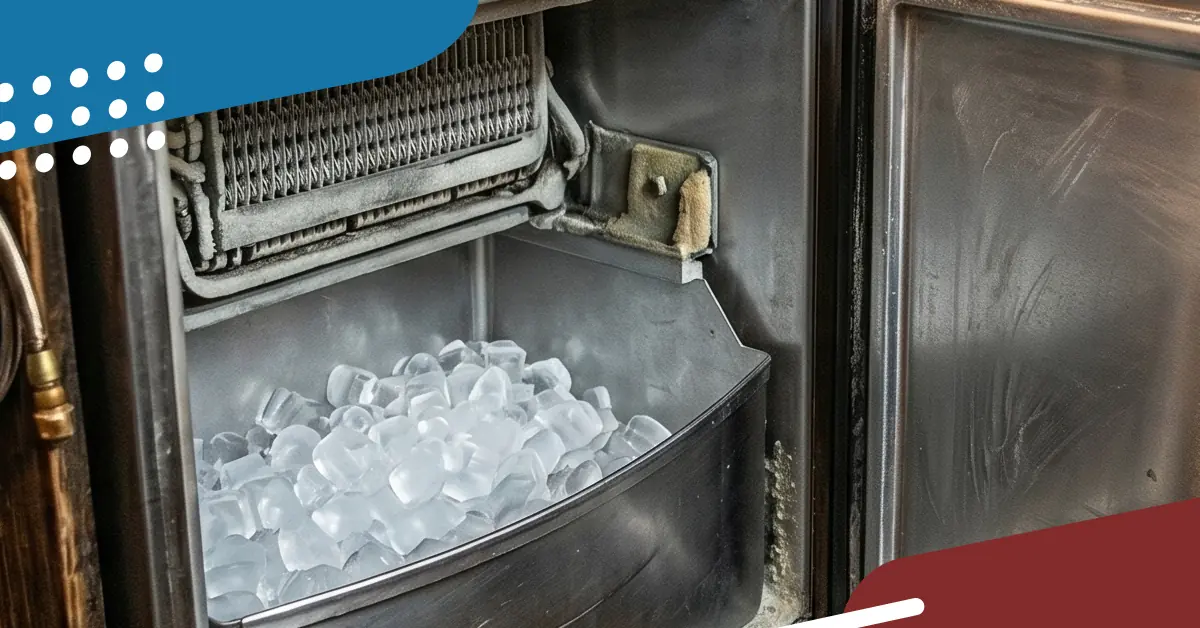
Commercial ice machine harvesting and water-system failures are heavily driven by two distinct types of contamination: mineral scale (calcium/magnesium) and slime (biological biofilm). Diagnosing the specific contaminant is critical because they require completely different chemical treatments. Scale requires an acid-based descaler to dissolve mineral bonds, while biofilm requires an EPA-approved alkaline sanitizer to kill bacteria and yeast. Using the wrong chemical fails to clean the machine and can permanently damage the evaporator plating.
What is the Difference Between Ice Machine Scale and Slime?
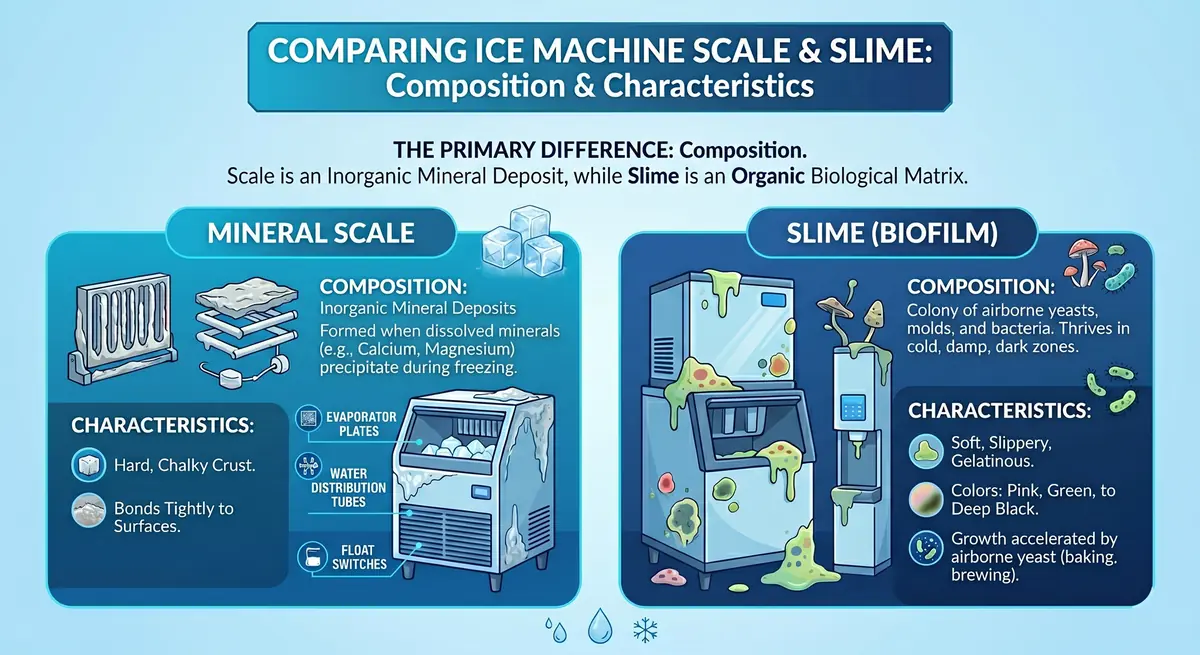
The primary difference between ice machine scale and slime is their composition: scale is an inorganic mineral deposit, whereas slime is an organic biological matrix.
- Mineral Scale: Formed when dissolved minerals in incoming water (primarily calcium carbonate and magnesium) precipitate out of the water as it freezes. Scale manifests as a hard, chalky, white or grey crust that bonds tightly to the evaporator plates, water distribution tubes, and float switches.
- Slime (Biofilm): A living colony of airborne yeasts, molds, and environmental bacteria. It thrives in the cold, damp, and dark environment of the food zone. Slime manifests as a soft, slippery, gelatinous substance that can range in color from pink and green to deep black (often accelerated by airborne yeast in commercial kitchens that bake bread or brew beer).
How to Diagnose the Contaminant: The Field Test
Before applying cleaning chemicals, technicians must accurately identify the dominant contaminant. Treating biofilm with a standard descaler will not kill the biological growth, and treating heavy scale with sanitizer will not dissolve the mineral crust.
Try these two diagnostic checks during the inspection:
1. The Physical Texture Check
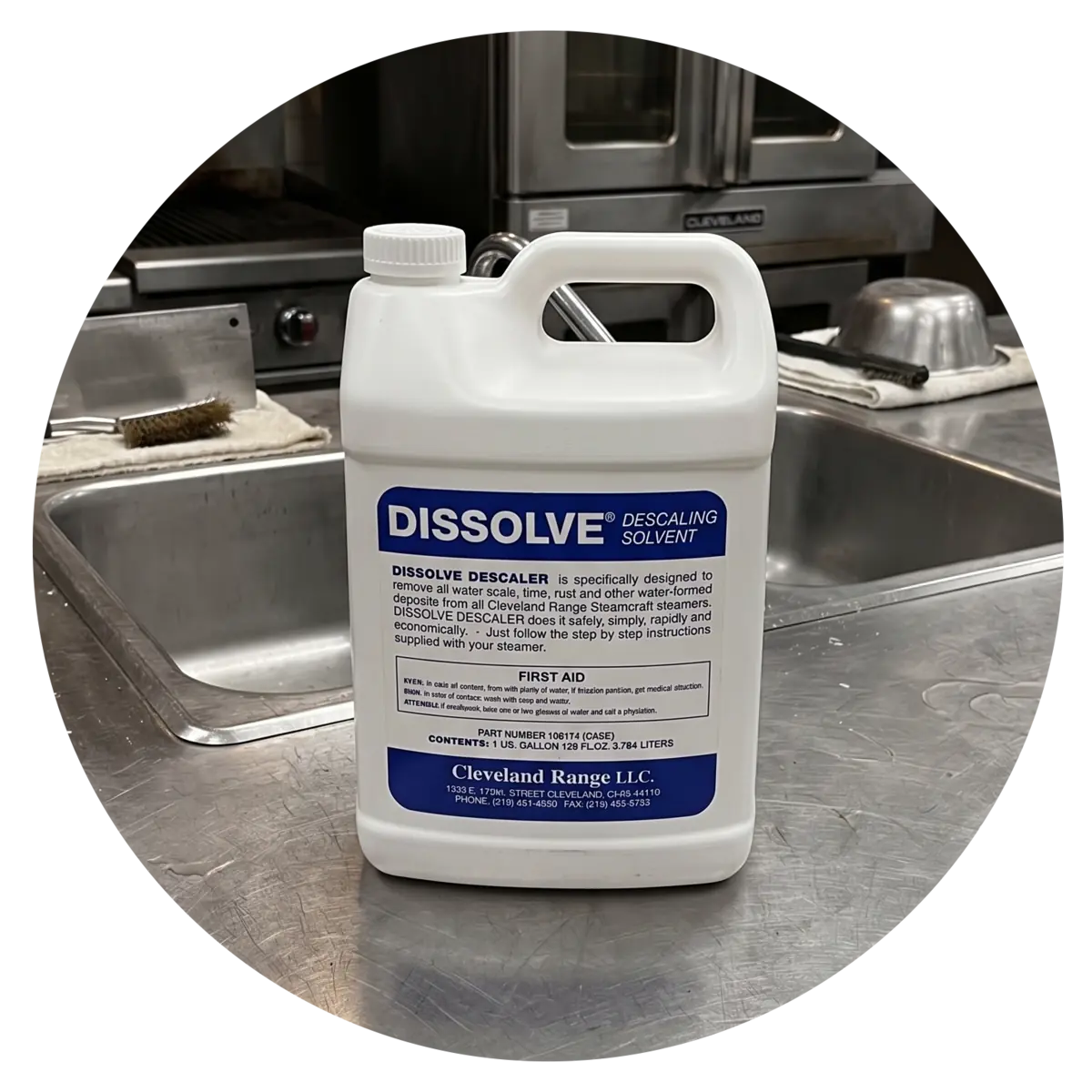
Feel the surface of the water distribution tube or the evaporator frame. If the deposit is rough, rough-textured like sandpaper, and impossible to wipe away with a finger, it is mineral scale. If the deposit wipes away easily but leaves a slippery or greasy residue on your glove, it is biological biofilm.
2. The Chemical Reactivity Test
Apply a single drop of concentrated phosphoric-acid ice machine cleaner directly to a dry sample of the deposit. If the deposit instantly begins to effervesce, fizz, and bubble, it is a calcium-based mineral scale reacting to the acid. If there is zero visible reaction or bubbling, the barrier is organic slime.
Step-by-Step Deep Cleaning Guide for Technicians
To restore an ice machine to factory sanitary standards without damaging internal components, follow this structured cleaning sequence:
| Step | Target Contaminant | Correct Chemical Agent | Technical Action Required |
|---|---|---|---|
| 1. Purge & Drain | Residual Water & Ice | None | Clear all ice from the storage bin to prevent chemical contamination. Manually drain the water sump tank completely. |
| 2. Descale Cycle | Inorganic Mineral Scale | Nickel-Safe Ice Machine Cleaner (Phosphoric/Citric Acid base) | Add chemical to the sump per manufacturer ratios. Run the machine's manual "Clean" cycle for 10–20 minutes. Never use standard acid on nickel-plated evaporators. |
| 3. Sanitize Cycle | Organic Biofilm & Yeast | EPA-Approved Food-Zone Sanitizer(Alkaline/Quaternary Ammonium base) | Flush the system with clean water, refill, add sanitizer, and run the clean cycle again. Sanitizer kills remaining biological matrices. |
| 4. Component Scrub | Deep-Set Trapped Scale/Slime | Manual Dip & Brush | Remove the water distribution pipe, float switch, and ice thickness probe. Submerge them in separate cleaning buckets and scrub using a soft nylon brush. |
Frequently Asked Questions (FAQs)
Why can't I use standard scale remover on all ice machines?
Many commercial ice machines (such as Manitowoc or Hoshizaki) utilize nickel-plated or stainless steel evaporator plates. Standard, non-approved descalers contain harsh acids that will permanently strip the nickel plating off the copper base. Once the plating is damaged, ice will bond permanently to the raw copper, causing harvest-timeout faults and ruining the evaporator. Always use a verified nickel-safe formula.
How often should a commercial ice machine be deep cleaned?
An ice machine should undergo a full scale and slime deep clean at least every six months (twice annually). However, units located near bread-baking stations, pizza dough prep areas, or microbrewery draft lines should be deep cleaned every 30 to 60 days due to high concentrations of airborne yeast that accelerate rapid slime growth.
Should I source OEM or OCM chemicals and cleaning components?
For replacement water system parts damaged by scale (like water pumps or float switches), using Original Component Manufacturer (OCM) parts provides an exact factory match for materials and tolerances without the branded equipment markup. When sourcing cleaning chemicals, ensure the formula explicitly meets the equipment manufacturer's specifications (such as being explicitly labeled nickel-safe) to achieve identical results for less overhead cost.