ADA Compliance in the 2026 Commercial Kitchen: Reach & Clearance
Jun 1st 2026
Reading Time: 4 Minutes

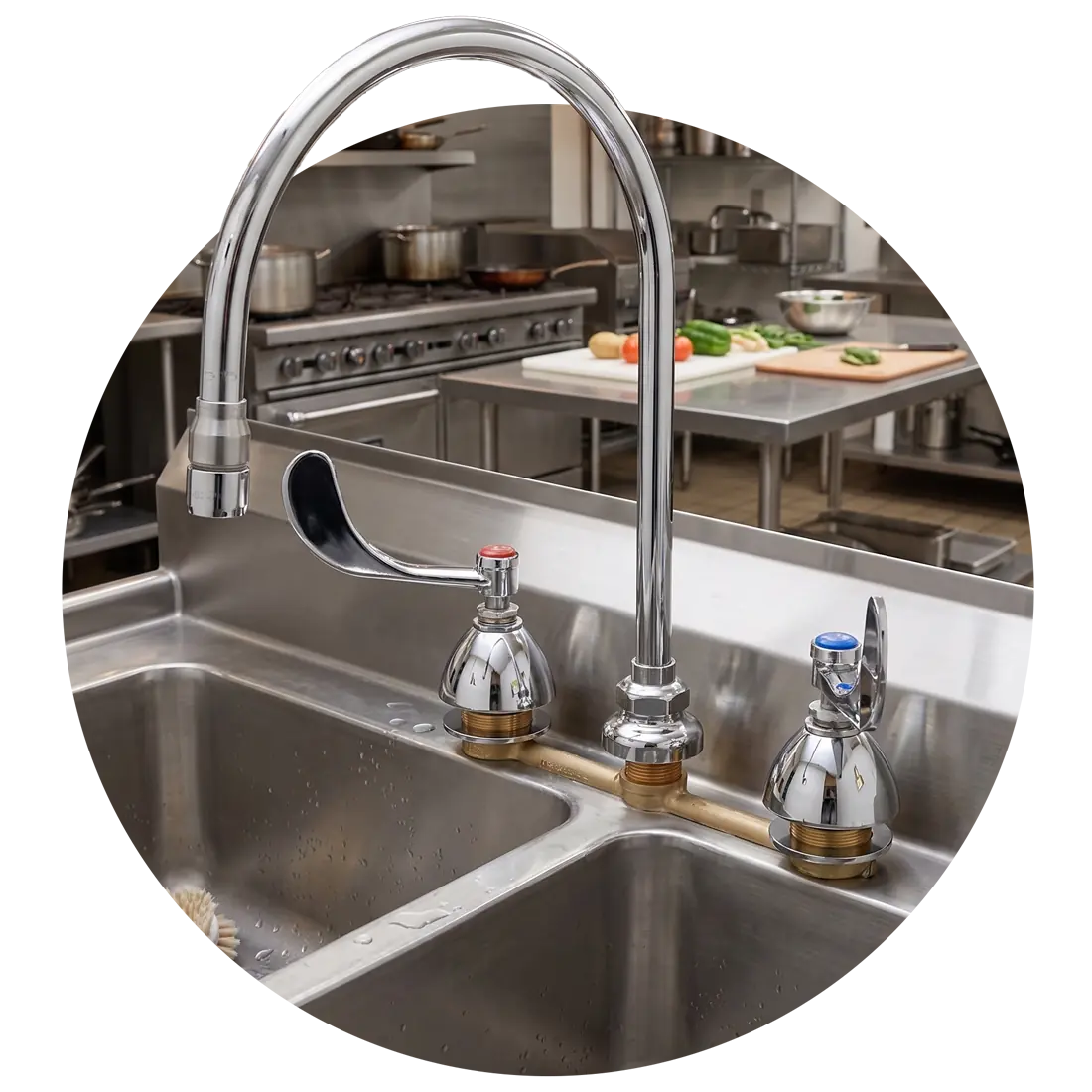
When most restaurant owners think of the Americans with Disabilities Act (ADA), they immediately think of the front of house. After all, wheelchair ramps, accessible restrooms, and table heights are all part of it. But in 2026, compliance inspectors and legal teams are increasingly walking through the kitchen doors.
Designing an ADA-compliant back of house is not just about mitigating the risk of expensive lawsuits. It is a strategic move that expands your hiring pool in a tight labor market and creates a safer, more efficient workflow for your entire team.
Here are the three critical BOH compliance metrics your facility needs to meet, and how to verify your equipment measures up.
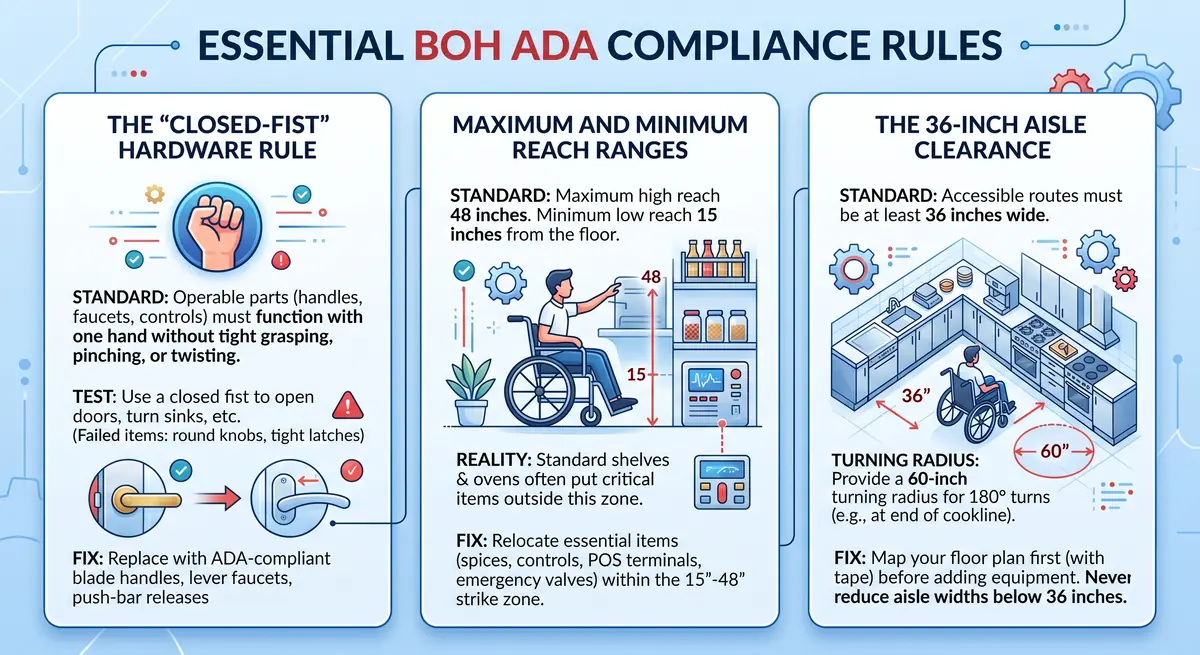
1. The "Closed-Fist" Hardware Rule
This is the most common point of failure during a BOH ADA inspection because it involves the moving parts of your equipment.
- The Standard: Any "operable part" (door handles, faucet levers, equipment controls) must be operable with one hand, without tight grasping, pinching, or twisting of the wrist.
- The Test: If an employee cannot open a walk-in cooler door or turn on the prep sink using a closed fist, the hardware is out of compliance.
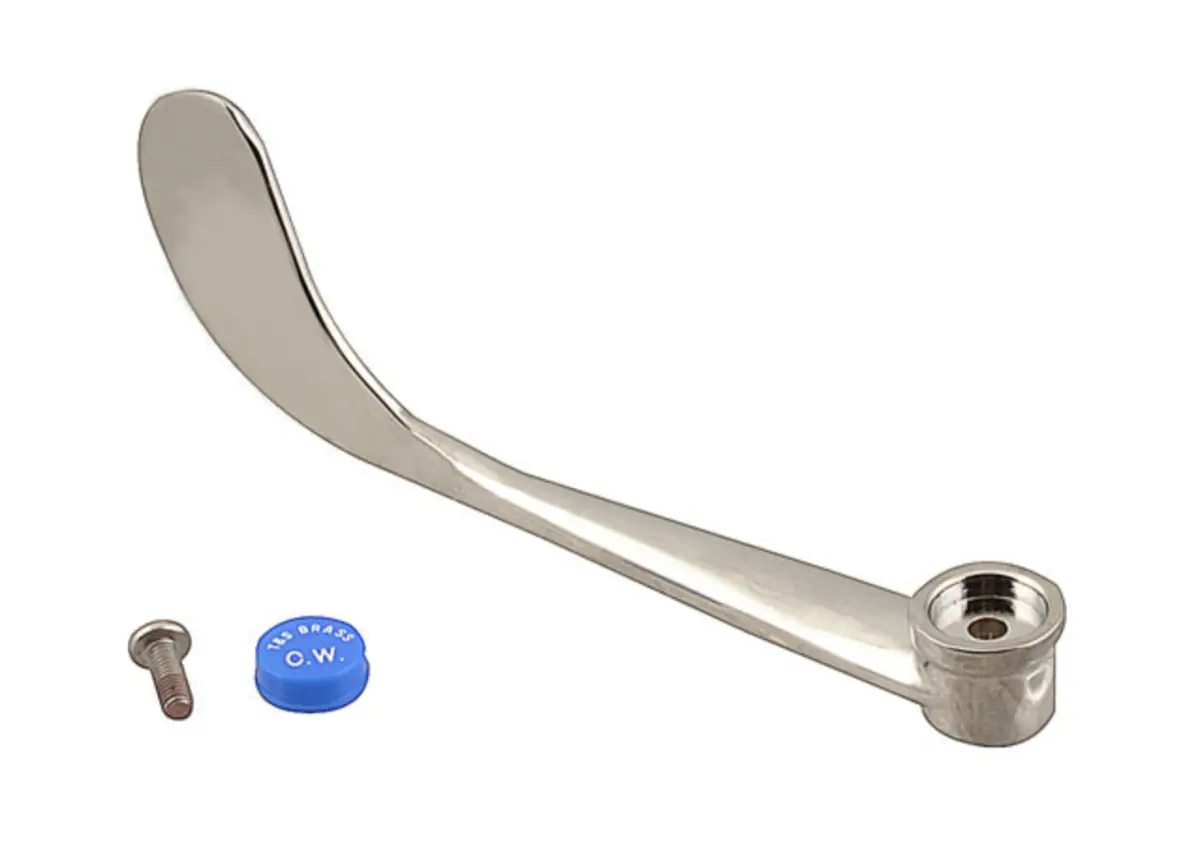
- The Fix: Replace standard round knobs and tight-pinch latches with ADA-compliant blade handles, lever faucets, and push-bar releases.
2. Maximum and Minimum Reach Ranges
Your storage shelves, equipment controls, and prep stations must be accessible to an employee using a wheelchair.
- The Standard (Forward & Side Reach): The maximum high reach cannot exceed 48 inches from the floor, and the minimum low reach cannot be lower than 15 inches.
- The Reality: Most standard commercial shelving units and double-stacked ovens place critical controls or ingredients completely out of the compliance zone.
- The Fix: If you cannot physically lower the equipment, you must ensure that all essential controls and frequently used items (like primary spice racks, POS terminals, and emergency shut-off valves) are relocated within the 15" to 48" strike zone.
3. The 36-Inch Aisle Clearance
Commercial kitchens are notoriously cramped, but you cannot sacrifice accessibility for an extra prep table.
- The Standard: Accessible routes within the kitchen must be at least 36 inches wide to accommodate a wheelchair. Furthermore, if an employee needs to make a 180-degree turn (like at the end of a cookline), you must provide a 60-inch turning radius.
- The Fix: When planning an equipment upgrade or a layout shift, map the floor with painter's tape first. If a new, deeper reach-in cooler pushes your aisle width down to 34 inches, you are instantly out of compliance.
Sourcing ADA-Compliant Hardware
If an inspector flags your hand sinks or walk-in doors for non-compliant handles, you don't need to replace the entire unit. You just need to swap the hardware.
Upgrading to ADA-compliant components is a simple retrofit. Whether you need wrist-blade handles for a T&S Brass faucet or an easy-release latch for a Kason cooler door, you can source the exact OEM or AllPoints Original Component Manufacturer (OCM) replacements to pass inspection without the OEM price tag.
Pro Tip:
If you are unsure if a specific handle or lever meets the "closed-fist" standard, use the mobile version of AllPointsFPS.com to pull up the digital specification sheets for our hardware right from the kitchen floor to verify ADA compliance before you place the order.